
Introduction
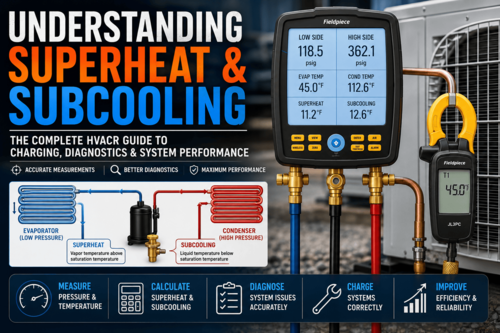
Superheat and subcooling are two of the most vital measurements utilized in the diagnostics of refrigeration and air conditioning systems. These measurements provide technicians with essential insights regarding refrigerant flow, evaporator performance, condenser efficiency, refrigerant charge status, and the overall health of the system. By analyzing superheat and subcooling, professionals can make more informed decisions that directly impact system performance and reliability.
Despite the critical nature of these measurements, many technicians entering the HVACR industry often find themselves grappling with misconceptions about superheat and subcooling. While numerous technicians can perform the necessary calculations, they frequently lack a thorough understanding of what these values signify and how they correlate to the overall functionality of the system. This gap in knowledge can lead to inefficient practices and suboptimal system performance.
Mastering the concepts of superheat and subcooling equips technicians with the tools they need to charge systems accurately, diagnose faults effectively, improve system efficiency, prevent compressor damage, optimize refrigeration performance, and ultimately reduce energy consumption. This comprehensive guide aims to elucidate the principles underlying superheat and subcooling, detailing how to measure these values correctly, interpret the readings, and apply this knowledge in various diagnostic scenarios.
Whether you are an apprentice, a student, a technician, a contractor, or a seasoned HVACR professional, this guide is designed to enhance your understanding of two of the most powerful diagnostic tools available in the refrigeration industry. By delving deeper into these concepts, you will be better equipped to tackle real-world challenges and ensure optimal system performance.
Why Superheat and Subcooling Matter
Modern refrigeration systems operate based on predictable thermodynamic principles that govern their functionality. Understanding these principles is crucial for anyone involved in the design, installation, or maintenance of HVACR systems. Each refrigeration system relies on key factors such as heat transfer, pressure-temperature relationships, controlled refrigerant flow, proper evaporator feeding, and efficient condenser operation to function effectively.
Superheat and subcooling provide technicians with the means to evaluate all of these critical factors comprehensively. These measurements allow for a more nuanced understanding of how refrigerants behave under varying conditions, enabling technicians to make informed decisions that enhance system performance. Without accurate superheat and subcooling measurements, the process of refrigerant charging devolves into mere guesswork, which can compromise system efficiency and longevity.
With the correct measurements in hand, technicians can diagnose system conditions accurately and with confidence. This capability not only aids in identifying existing issues but also plays a vital role in proactive maintenance strategies. By understanding the implications of both superheat and subcooling, technicians can ensure that systems operate within their optimal ranges, ultimately leading to improved performance and reduced operational costs.
Understanding Saturation Temperature
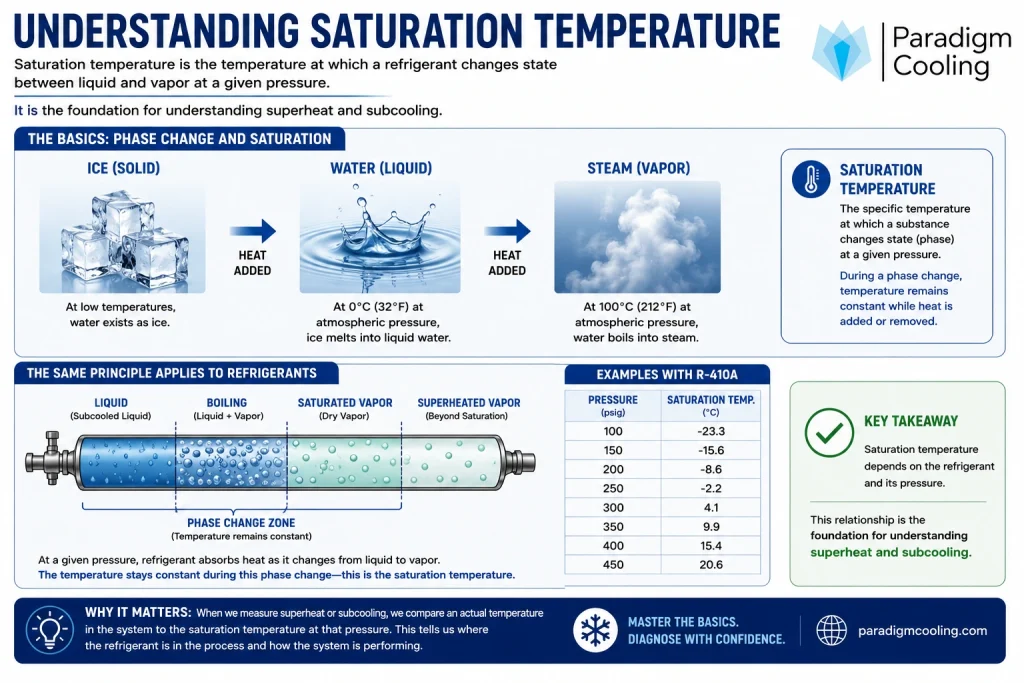
Before delving into superheat and subcooling, it is imperative for technicians to grasp the concept of saturation temperature. The saturation temperature is defined as the temperature at which a refrigerant transitions between its different states, such as from a liquid to vapor and vice versa. This understanding is foundational for interpreting superheat and subcooling measurements effectively.
For instance, when liquid refrigerant becomes vapor, it reaches its saturation temperature. Conversely, when vapor refrigerant condenses back into a liquid, it again corresponds to a specific saturation temperature. Each refrigerant exhibits a unique pressure-temperature relationship, meaning that as pressure changes within the system, the saturation temperature will also fluctuate, affecting the refrigerant's behavior and characteristics.
This dynamic relationship between pressure and temperature serves as the foundation for understanding superheat and subcooling measurements. Grasping how saturation temperature interacts with other system variables is essential for technicians aiming to optimize system performance and efficiency. Consequently, a thorough understanding of saturation temperature is a prerequisite for effectively measuring and interpreting superheat and subcooling.
Understanding Pressure-Temperature Relationships
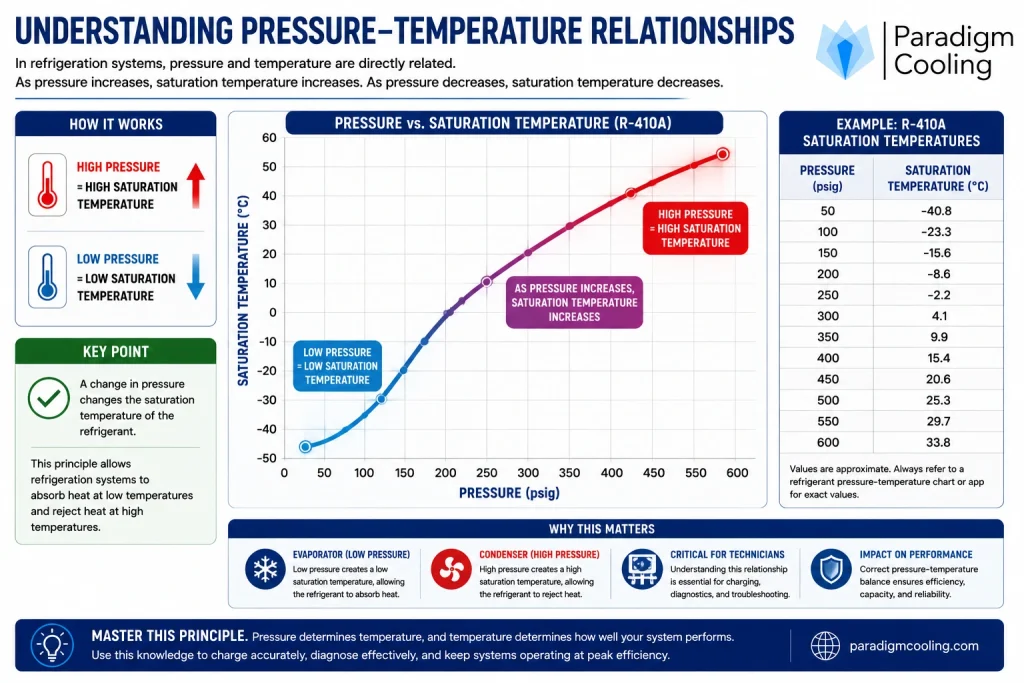
In refrigeration systems, the relationship between pressure and temperature is crucial. Higher pressure within the system results in higher saturation temperatures, while lower pressure leads to lower saturation temperatures. This principle is vital for understanding how refrigeration systems absorb and reject heat, as it dictates their operational efficiency and effectiveness.
The implications of this principle allow refrigeration systems to absorb heat at low temperatures while rejecting heat at higher temperatures. Understanding these pressure-temperature relationships is essential for several processes, including refrigerant charging, diagnostics, system commissioning, and troubleshooting. Without a firm grasp of how pressure and temperature interact, technicians may struggle to diagnose issues accurately or optimize system performance.
Mastering the pressure-temperature relationship enhances the technician's ability to perform effective refrigerant charging, conduct thorough diagnostics, and facilitate successful system commissioning. It also aids in troubleshooting efforts, allowing technicians to pinpoint issues and implement solutions that restore system efficiency. Thus, a comprehensive understanding of these relationships is a cornerstone of effective refrigeration maintenance and repair.
What Is Superheat?
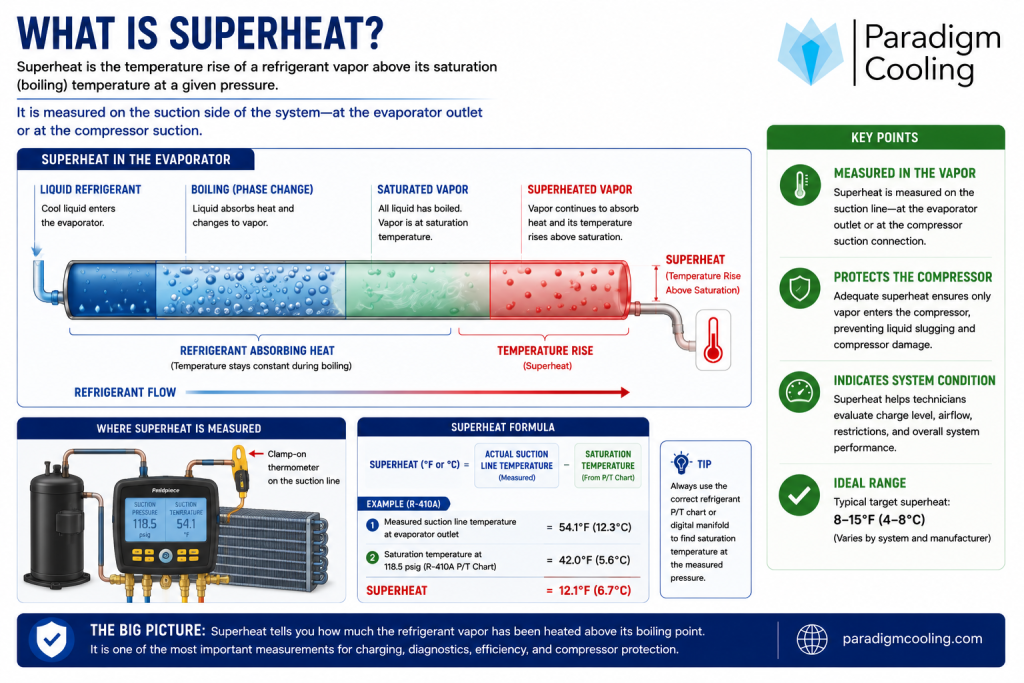
Superheat is defined as the amount by which the temperature of refrigerant vapor surpasses its corresponding saturation temperature. In simpler terms, superheat indicates how much additional heat has been added to the refrigerant vapor after all liquid refrigerant has evaporated. This measurement occurs within the evaporator and suction line, where the vapor is expected to be in its gaseous state before entering the compressor.
The presence of superheat is a critical indicator of system performance, as it reflects the state of the refrigerant as it transitions from liquid to vapor. This temperature increase signifies that the refrigerant has absorbed additional heat, which is essential for ensuring that the refrigerant entering the compressor is completely vaporized. Understanding superheat is vital for diagnosing potential issues within the system and ensuring optimal operation.
Why Superheat Exists
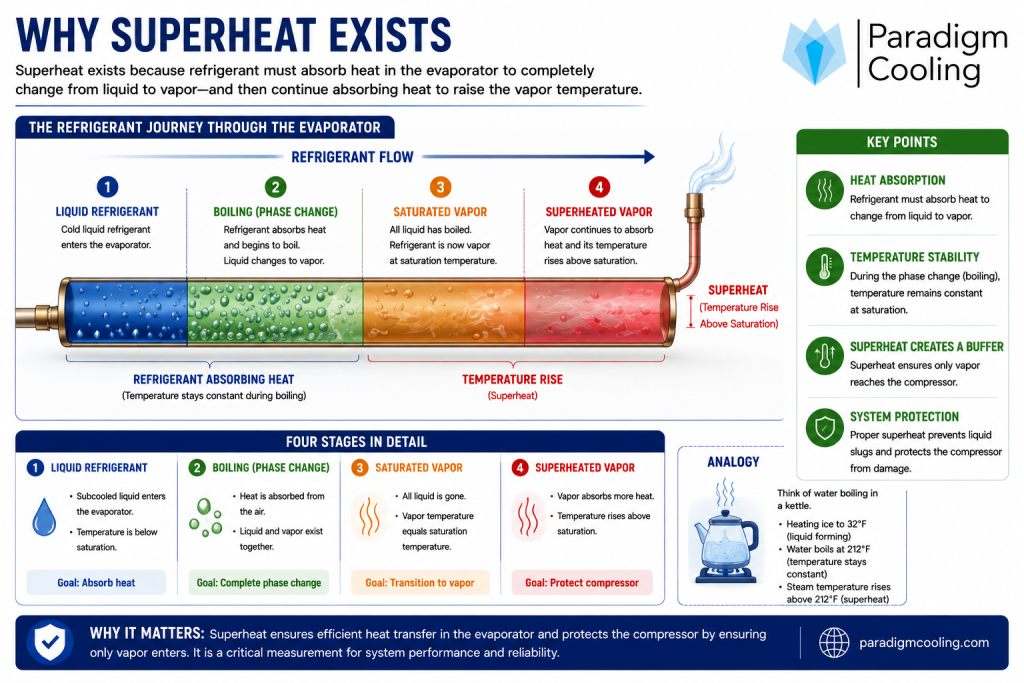
The primary function of the evaporator is to boil the refrigerant, transforming it from a liquid state to a vapor state. When all liquid refrigerant has successfully evaporated, the refrigerant reaches a point where it becomes 100% vapor. At this stage, any additional heat absorbed by the refrigerant raises the vapor temperature, leading to the phenomenon known as superheat.
This temperature increase is critical for ensuring that the refrigerant is fully vaporized before it reaches the compressor. If the refrigerant enters the compressor in a partially liquid state, it can cause significant damage to the compressor, leading to operational inefficiencies and failures. Therefore, understanding why and how superheat exists is essential for maintaining the integrity and efficiency of refrigeration systems.
Superheat Formula
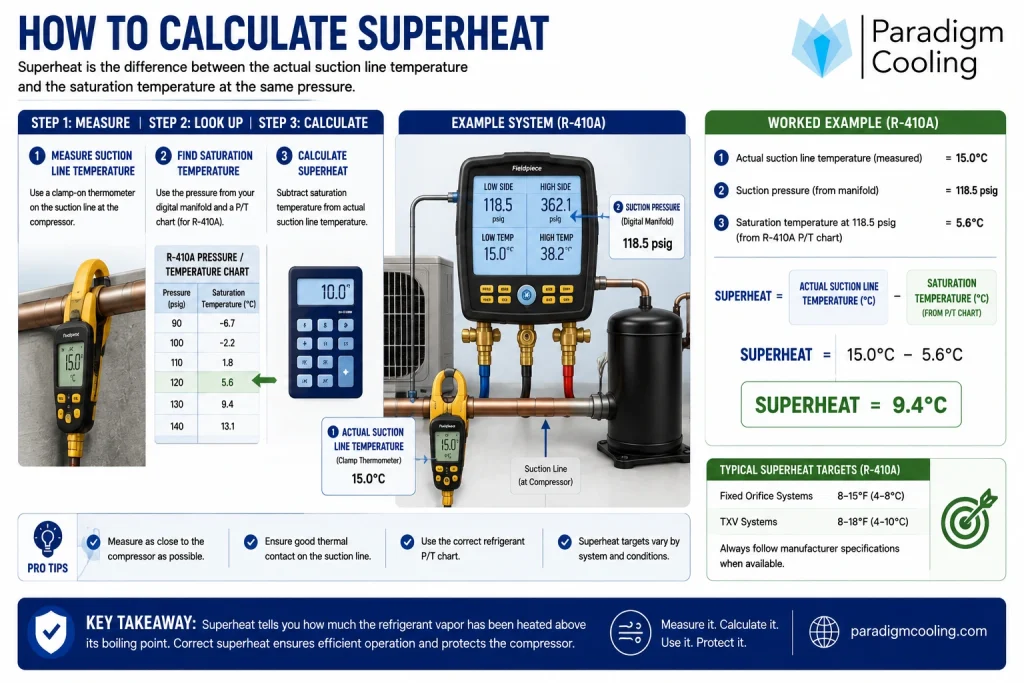
Superheat can be calculated using the following formula: Superheat = Actual Suction Line Temperature – Saturated Evaporating Temperature. This equation allows technicians to quantify the superheat value by comparing the actual temperature of the suction line to the saturation temperature corresponding to the refrigerant's state.
For example, if the suction line temperature is measured at 15°C and the saturation temperature is 5°C, the superheat can be calculated as follows: 15°C – 5°C = 10°C of superheat. This calculated value provides essential information about the state of the refrigerant and its behavior within the system.
Understanding how to calculate superheat is crucial for technicians, as it allows them to evaluate the performance of the evaporator, the refrigerant charge, meter device operation, and compressor protection. By accurately assessing superheat, technicians can identify potential issues and make necessary adjustments to ensure optimal system performance.
Why Superheat Is Important
Superheat is an invaluable measurement that helps technicians evaluate several critical aspects of refrigeration system performance. These include evaporator performance, refrigerant charge status, metering device operation, compressor protection, and the stability of refrigerant flow. Each of these factors plays a significant role in the overall efficiency and functionality of the system.
Most importantly, superheat ensures that liquid refrigerant does not return to the compressor. Liquid refrigerant returning to the compressor can lead to severe consequences, including floodback, slugging, oil dilution, and mechanical failure. Understanding the importance of maintaining appropriate superheat levels is essential for preventing these issues and ensuring long-term reliability.
By evaluating superheat effectively, technicians can make informed decisions regarding system adjustments, repairs, and preventive maintenance strategies. This proactive approach not only enhances system performance but also extends the lifespan of the equipment, ultimately leading to reduced operational costs. Consequently, mastering the concept of superheat is crucial for any technician aiming to excel in the refrigeration field.
High Superheat
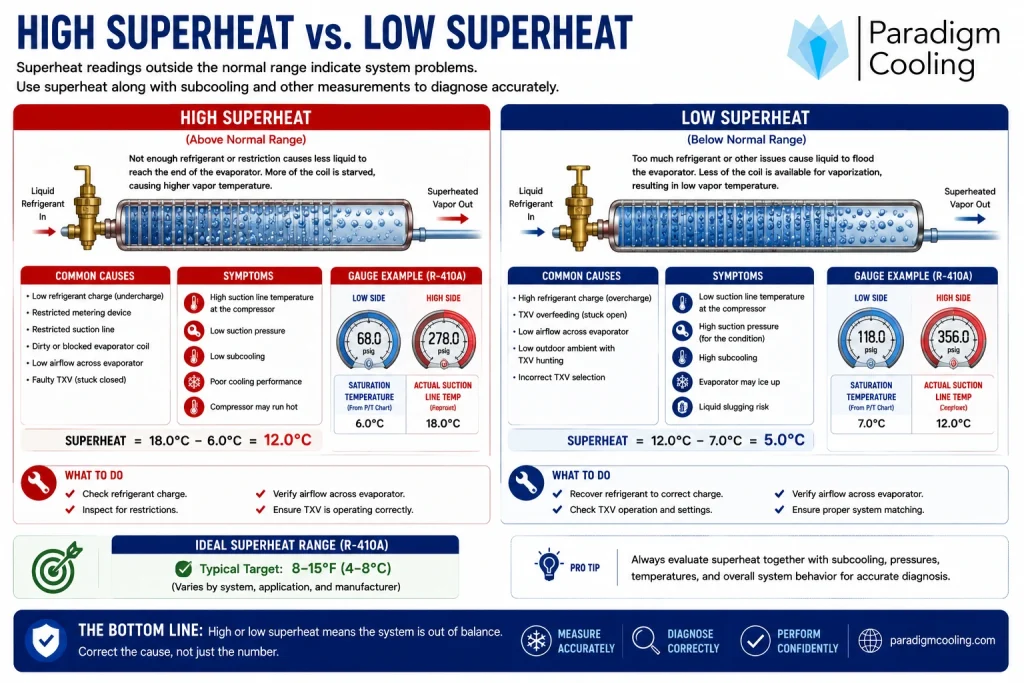
High superheat generally indicates potential issues within the refrigeration system that require immediate attention. Common causes of high superheat include refrigerant undercharge, restricted metering devices, low evaporator load, airflow restrictions, and dirty evaporator coils. Each of these issues can significantly impact the system's performance and efficiency.
Symptoms associated with high superheat often manifest as reduced cooling capacity, low suction pressure, compressor overheating, and diminished overall system capacity. Technicians must remain vigilant for these signs, as they can indicate underlying problems that could lead to more significant failures if not addressed promptly. Identifying the root causes of high superheat is essential for implementing effective solutions.
By diagnosing high superheat accurately, technicians can take appropriate actions to rectify the situation, such as recharging the system with refrigerant, cleaning evaporator coils, or addressing airflow issues. These corrective measures are vital for restoring system efficiency and optimizing performance. Understanding the implications of high superheat is crucial for maintaining the health of refrigeration systems.
Low Superheat
Low superheat generally indicates the presence of issues that could adversely affect system performance. Common causes of low superheat include refrigerant overfeeding, flooding evaporators, overcharge conditions, and metering device problems. Each of these factors can lead to inefficient system operation and potential damage to the compressor.
Symptoms associated with low superheat often include floodback, an increased risk of compressor damage, and unstable refrigerant flow. Technicians must be aware of these indicators, as they can signal significant operational problems that require immediate intervention. Recognizing the signs of low superheat is essential for preventing costly repairs and ensuring system reliability.
To address low superheat, technicians may need to take corrective actions such as adjusting the refrigerant charge, inspecting the metering device, and ensuring proper airflow across the evaporator. These measures are crucial for restoring the system to its optimal operating conditions. Understanding the implications of low superheat allows technicians to implement effective solutions that enhance system performance.
Typical Superheat Ranges
General guidelines for typical superheat ranges vary depending on the type of system in question. For air conditioning systems, the recommended superheat range is typically between 8°C and 12°C. These values ensure that the system operates efficiently while preventing liquid refrigerant from returning to the compressor.
In the context of commercial refrigeration, the typical superheat range is generally between 6°C and 10°C. This range helps maintain optimal performance and reliability in commercial applications. For low-temperature systems, the appropriate superheat range is usually between 4°C and 8°C, allowing for efficient operation under challenging conditions.
It is important to note that actual targets for superheat may vary according to equipment design and manufacturer specifications. Technicians should always refer to the manufacturer's guidelines when determining the optimal superheat settings for specific systems. By adhering to these guidelines, technicians can ensure that systems perform at their best.
What Is Subcooling?
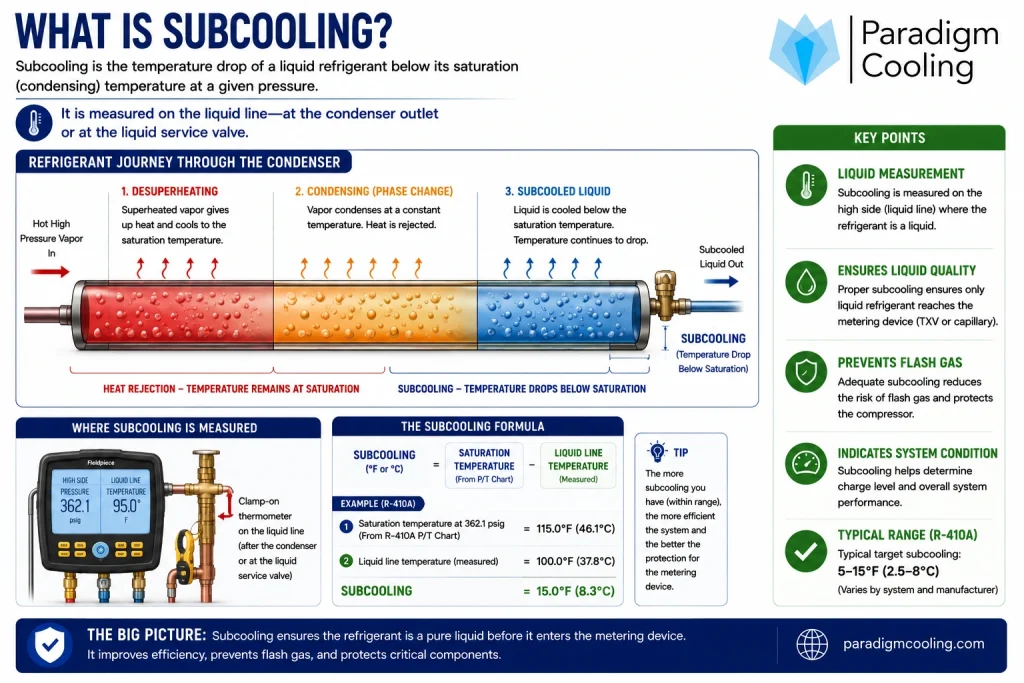
Subcooling is defined as the amount by which the temperature of liquid refrigerant falls below its saturation temperature. This occurs in the condenser after the refrigerant has completely condensed into a liquid state. Understanding subcooling is essential for evaluating the overall health of the refrigeration system.
The condenser plays a crucial role in removing heat from the refrigerant. Once all vapor has condensed into liquid, any additional heat removal results in a further decrease in liquid temperature. This drop in temperature below saturation is what we refer to as subcooling, and it has important implications for system performance.
Why Subcooling Is Important
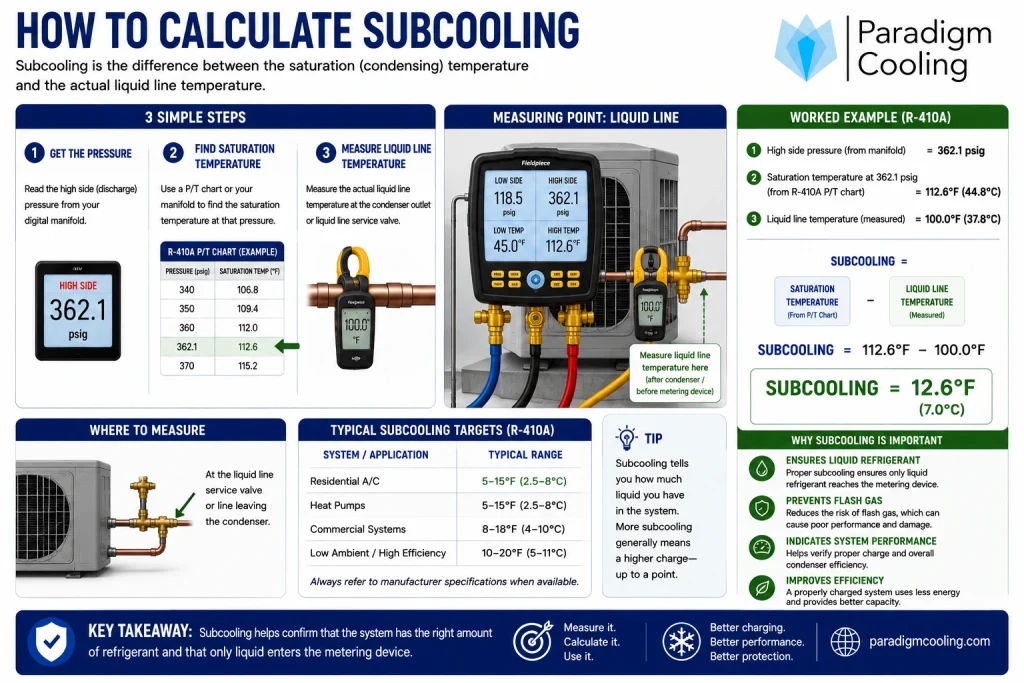
Subcooling is a critical measurement that enables technicians to evaluate several essential aspects of system performance. These include the refrigerant charge condition, condenser performance, liquid refrigerant quality, and overall system efficiency. Monitoring subcooling levels is vital for ensuring that systems operate as intended.
Adequate subcooling ensures that solid liquid refrigerant reaches the metering device while minimizing flash gas formation. This is crucial for maintaining stable system performance and optimizing efficiency. High subcooling levels can indicate that the system is functioning well, while insufficient subcooling can lead to operational inefficiencies.
By carefully evaluating subcooling, technicians can make informed decisions about necessary adjustments or repairs to enhance system performance. This proactive approach can help prevent issues before they escalate, ultimately leading to improved reliability and efficiency. Mastering the concept of subcooling is vital for technicians aiming to excel in the refrigeration industry.
High Subcooling
High subcooling may indicate several potential issues within the refrigeration system that warrant attention. Common causes of high subcooling include refrigerant overcharge, liquid restrictions, and excessive refrigerant storage. Each of these factors can disrupt system efficiency and performance.
Symptoms associated with high subcooling often manifest as elevated head pressure, increased compressor workload, and higher energy consumption. Technicians must be vigilant for these signs, as they can indicate underlying problems that may lead to more significant failures if not addressed promptly. Identifying the root causes of high subcooling is essential for implementing effective solutions.
By diagnosing high subcooling accurately, technicians can take appropriate corrective measures, such as adjusting the refrigerant charge or addressing any liquid restrictions present in the system. These actions are vital for restoring system efficiency and optimizing performance. Understanding the implications of high subcooling is crucial for maintaining the health of refrigeration systems.
Low Subcooling
Low subcooling typically indicates the presence of issues that can adversely affect system performance. Common causes of low subcooling include refrigerant undercharge, flash gas formation, and condenser performance problems. Each of these factors can lead to inefficient system operation and potential damage to the compressor.
Symptoms associated with low subcooling often include reduced cooling capacity, unstable refrigerant flow, and poor evaporator feeding. Technicians must be aware of these indicators, as they can signal significant operational problems that require immediate intervention. Recognizing the signs of low subcooling is essential for preventing costly repairs and ensuring system reliability.
To address low subcooling, technicians may need to take corrective actions such as adjusting the refrigerant charge, inspecting the condenser, and ensuring proper airflow. These measures are crucial for restoring the system to its optimal operating conditions. Understanding the implications of low subcooling allows technicians to implement effective solutions that enhance system performance.
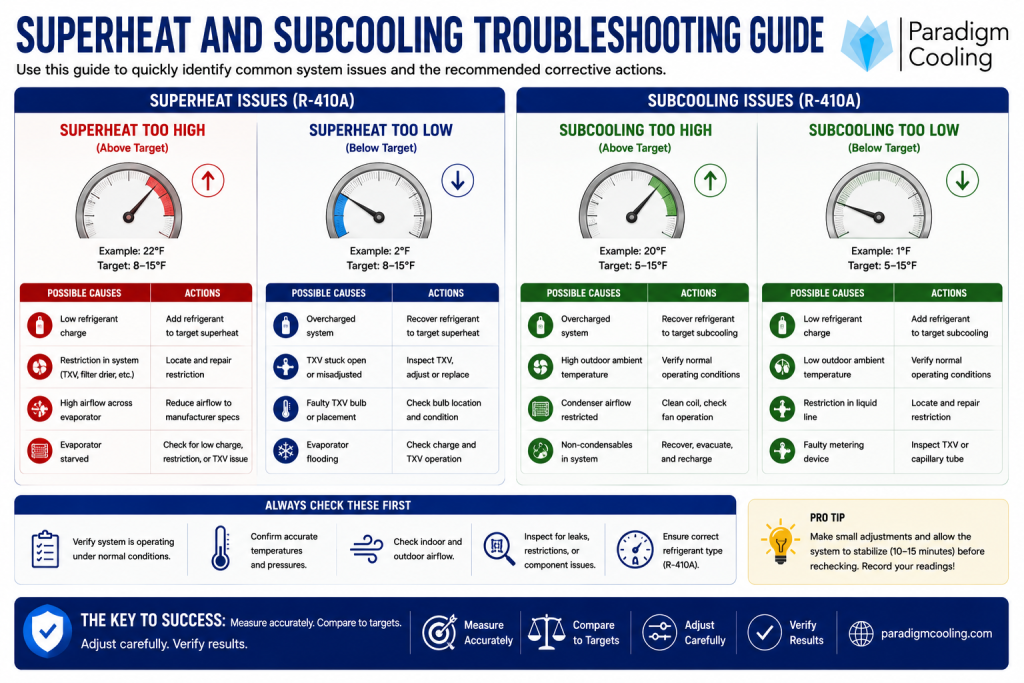
Typical Subcooling Ranges
General guidelines for typical subcooling ranges vary by system type. For air conditioning systems, the recommended subcooling range usually falls between 8°C and 12°C. These values help ensure that the system operates efficiently and that liquid refrigerant reaches the metering device effectively.
In commercial refrigeration applications, the typical subcooling range is generally between 5°C and 10°C. This range is designed to maintain optimal performance and reliability in commercial settings. For low-temperature systems, the appropriate subcooling range typically lies between 4°C and 8°C, allowing for efficient operation under demanding conditions.
It is important to note that actual values for subcooling may vary according to manufacturer specifications and equipment design. Technicians should always consult the manufacturer's guidelines to determine the optimal subcooling settings for specific systems. Adhering to these guidelines ensures that systems perform at their best.
Superheat vs Subcooling
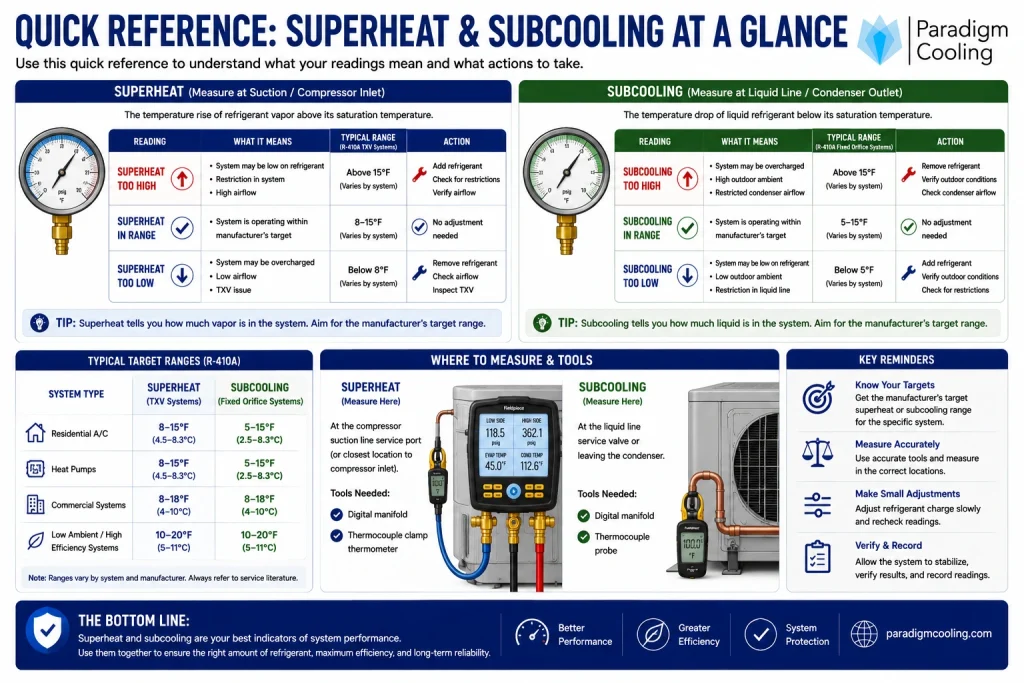
Superheat is a measurement that reflects the condition of vapor within the system, particularly regarding evaporator performance. It provides crucial insights into how well the evaporator is functioning and whether the refrigerant is appropriately charged. By understanding superheat, technicians can gauge the efficiency of the refrigeration cycle.
Conversely, subcooling measures the condition of liquid refrigerant and assesses condenser performance. It enables technicians to evaluate whether the liquid refrigerant is reaching the metering device in an optimal state. Together, superheat and subcooling provide a comprehensive understanding of system operation.
Technicians should never evaluate one measurement without considering the other, as both values are interconnected and essential for effective diagnostics. Analyzing superheat and subcooling together allows technicians to identify issues more accurately, facilitating timely interventions and improving overall system performance.
Fixed Orifice Systems
Fixed orifice systems commonly rely on superheat as the primary method for charging the system. In such systems, superheat provides valuable insights into evaporator feeding and the overall charge condition. Technicians need to understand how to measure and interpret superheat accurately to ensure optimal system performance.
Examples of fixed orifice systems include capillary tube systems and fixed metering devices. These systems often lack the complexity of more advanced designs, making superheat measurements even more critical for effective diagnostics and maintenance. Mastering the principles of superheat in fixed orifice systems is essential for technicians aiming to excel in their field.
TXV Systems
Thermostatic Expansion Valve (TXV) systems typically utilize subcooling as the primary method for charging. In these systems, the TXV automatically regulates evaporator superheat, ensuring that the refrigerant remains in its optimal state. As a result, subcooling becomes the preferred measurement for evaluating refrigerant charge status.
The preference for subcooling in TXV systems stems from its ability to provide a clearer picture of how well the refrigerant is functioning within the system. By focusing on subcooling, technicians can accurately assess the flow of liquid refrigerant and make necessary adjustments to optimize system performance. Understanding the dynamics of TXV systems is crucial for technicians aiming to maintain high efficiency.
Using Superheat and Subcooling Together
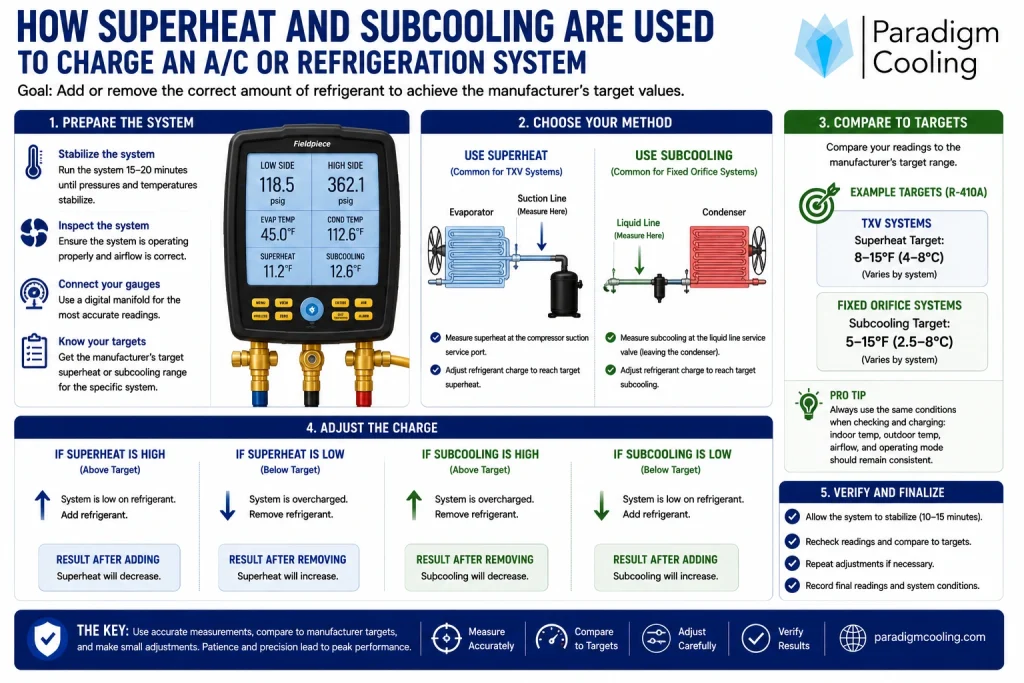
The most accurate diagnostics occur when both superheat and subcooling values are analyzed together. This comprehensive approach enables technicians to identify issues that may not be evident when evaluating either measurement independently. By considering both values, technicians can gain a deeper understanding of system performance and more effectively diagnose problems.
For instance, a combination of high superheat and low subcooling typically indicates a refrigerant undercharge, while low superheat and high subcooling may signal a refrigerant overcharge. In cases where both superheat and subcooling are high, it may suggest a restricted metering device, while low values for both could indicate poor compressor performance or system inefficiencies.
Common Charging Mistakes
Many technicians make significant mistakes during the refrigerant charging process, which can lead to inefficient system operation. Common errors include charging based solely on pressure readings, relying exclusively on sight glass observations, ignoring superheat measurements, neglecting subcooling evaluations, and overlooking airflow conditions. Each of these mistakes can have serious repercussions on system efficiency and reliability.
Accurate refrigerant charging requires a holistic approach that incorporates pressure readings, temperature measurements, superheat calculations, and subcooling evaluations. By utilizing all available data, technicians can ensure that systems are charged correctly and operating efficiently. Understanding these critical aspects of the charging process is essential for any technician seeking to excel in the HVACR field.
Superheat and Compressor Protection
Proper management of superheat is critical for protecting compressors from potential damage. Adequate superheat helps prevent issues such as floodback and slugging, which can cause significant harm to the compressor. Maintaining appropriate superheat levels is essential for preserving oil integrity and improving system reliability.
Compressor failures are frequently linked to poor superheat control, making it imperative for technicians to monitor and adjust superheat levels regularly. By ensuring that superheat remains within optimal ranges, technicians can enhance the longevity and performance of the compressor, ultimately leading to more efficient system operation.
Subcooling and System Efficiency
Proper subcooling is essential for improving refrigerant flow stability, cooling capacity, energy efficiency, and overall system reliability. When subcooling levels are insufficient, they can lead to reduced performance and increased operational costs. Technicians must ensure that subcooling is maintained at appropriate levels to optimize system functionality.
By closely monitoring subcooling, technicians can make necessary adjustments to enhance system performance and prevent inefficiencies. This proactive approach not only improves cooling capacity but also contributes to energy savings and increased system reliability. Understanding the significance of subcooling is vital for technicians aiming to provide effective HVACR solutions.
Common System Faults Diagnosed Using Superheat and Subcooling
Superheat and subcooling measurements allow technicians to diagnose a variety of common faults within refrigeration systems. These can include refrigerant undercharge, refrigerant overcharge, restrictions in the metering device, airflow problems, condenser issues, evaporator problems, and compressor inefficiencies. By leveraging these measurements, technicians can quickly identify and address issues that may be affecting system performance.
Superheat and subcooling remain two of the most powerful diagnostic tools available in the refrigeration industry. Their effective use can lead to improved system performance, reduced energy consumption, and enhanced reliability. Technicians who master the application of these measurements are better equipped to ensure optimal functionality in HVACR systems.
Digital Manifolds and Modern Diagnostics
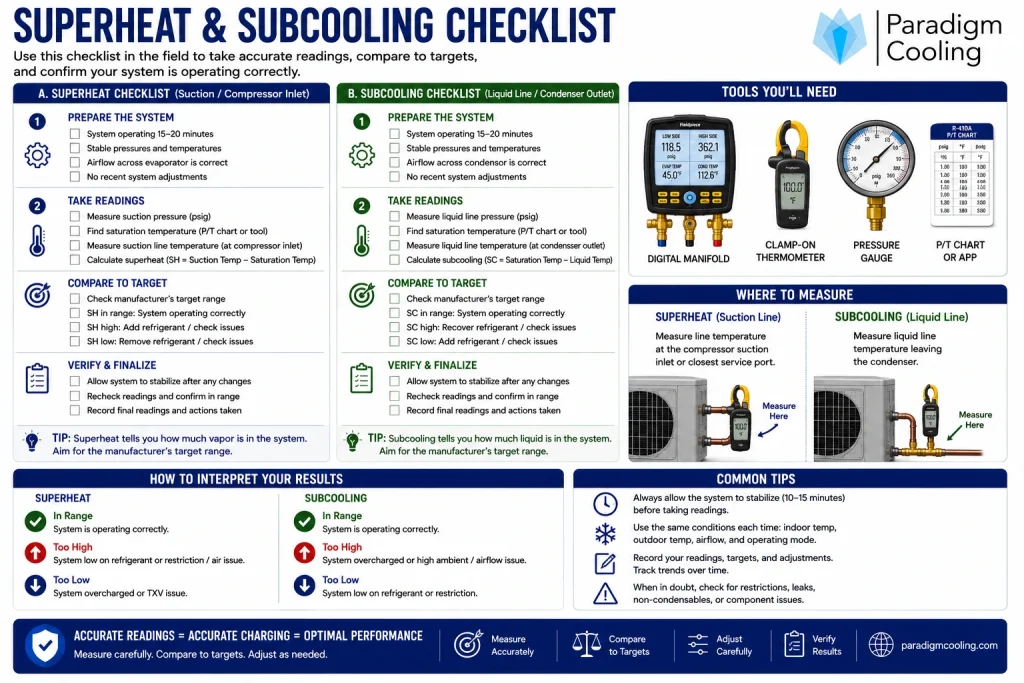
Modern digital manifolds have significantly simplified the processes of pressure measurement, saturation calculations, superheat calculations, and subcooling calculations. These tools enhance the efficiency of technicians by providing accurate and real-time data, allowing for quicker diagnostics and repairs. However, it remains essential for technicians to understand the underlying principles of these measurements.
While technology can greatly assist in diagnostics, it should not replace the fundamental knowledge that technicians need to possess. A thorough understanding of the principles behind superheat and subcooling will enable technicians to interpret the data provided by digital tools accurately and make informed decisions regarding system performance. Ultimately, leveraging technology to support knowledge will lead to better outcomes in the HVACR field.
Download Free Superheat and Subcooling Resources
To assist HVACR technicians in enhancing their charging accuracy and diagnostic capabilities, we offer a selection of free resources that can be downloaded. These resources are specifically designed to provide practical, hands-on support for technicians working in the field. By utilizing these materials, technicians can gain a clearer understanding of superheat and subcooling concepts, which are crucial for effective refrigerant management. Access to these tools can significantly improve both the efficiency and effectiveness of HVACR systems in various applications. We encourage all technicians to take advantage of these valuable resources to advance their skills.
- Superheat & Subcooling Worksheet
- Refrigeration Cycle Quick Reference Guide
- HVACR Multimeter Cheat Sheet
- HVACR Diagnostic Checklist
- Compressor Fault Diagnosis Sheet
These resources provide essential practical support for field diagnostics and system optimization. By using these documents, technicians can streamline their processes and enhance their understanding of system performance. The worksheets and guides are tailored to meet the day-to-day challenges faced by HVACR professionals. They not only facilitate better diagnostics but also contribute to overall system reliability and efficiency. We believe these tools will empower technicians to excel in their roles and deliver exceptional service.
Watch the Superheat and Subcooling Video Series
For practical demonstrations related to refrigerant charging, pressure-temperature relationships, system diagnostics, and troubleshooting procedures, we invite you to visit the Paradigm Cooling YouTube channel. This platform features a collection of video training sessions that provide visual insights into the concepts discussed in this guide. The videos are designed to reinforce learning through real-world examples and scenarios. By watching these demonstrations, technicians can better grasp the nuances of HVACR systems and apply their knowledge effectively in the field. We encourage all technicians to utilize this valuable educational resource to enhance their skills.
Our video training series offers a range of real-world examples that illustrate the critical concepts covered in this guide. Each video is crafted to enhance understanding and retention of information regarding superheat and subcooling. By engaging with these videos, technicians can visualize the processes and systems in action, making the theoretical aspects more relatable and easier to comprehend. This interactive approach to learning is beneficial for both new and experienced technicians looking to refine their expertise. We believe that these resources will serve as a significant asset in your journey towards mastering HVACR diagnostics.
Understanding Superheat and Subcooling eBook — Coming Soon
The complete Understanding Superheat and Subcooling eBook is currently in production and will be released in the Paradigm Cooling digital store. This comprehensive resource expands on various topics essential for HVACR professionals, providing in-depth information and insights. The eBook delves into critical areas such as pressure-temperature relationships and charging procedures, offering a thorough understanding that goes beyond the basics. It serves as an invaluable reference for technicians who wish to elevate their knowledge and skills in refrigerant management. By engaging with this eBook, technicians can gain a well-rounded perspective on the complexities of HVACR systems and their operation.
The eBook covers a range of essential topics, including charging procedures, TXV diagnostics, fixed orifice diagnostics, and refrigerant charge optimization. Each section is meticulously designed to provide clear explanations and practical applications, ensuring that technicians can immediately implement their newfound knowledge in the field. Furthermore, the resource examines system performance analysis and includes real-world troubleshooting case studies that illustrate common challenges faced by technicians. These case studies offer valuable lessons and strategies for effectively diagnosing and resolving issues. We believe this eBook will serve as a crucial tool for anyone looking to deepen their understanding of superheat and subcooling.
Go Deeper: Advanced Refrigeration Troubleshooting
Knowing the target ranges is the easy half. Knowing what a reading outside them is telling you is the job. Advanced Refrigeration Troubleshooting — A Field Reference for Refrigeration Diagnostics is a 141-page field reference built for exactly this kind of diagnosis: target values, fault matrices and worked examples you can use on site, drawn from 28 years in the trade.
Final Thoughts
Superheat and subcooling are among the most valuable measurements in refrigeration and air conditioning diagnostics. Mastery of these concepts is essential for technicians who aim to excel in their field and provide quality service. Understanding how to accurately measure, interpret, and apply these values allows technicians to diagnose faults more effectively, charge systems correctly, and enhance overall efficiency. Furthermore, a solid grasp of superheat and subcooling contributes to protecting critical system components from potential damage. This knowledge transforms the process of refrigeration troubleshooting from mere guesswork into a structured, data-driven methodology.
For every HVACR technician seeking to improve their technical skills, few topics offer a more significant return on investment than developing a deep understanding of superheat and subcooling. The ability to navigate these measurements with confidence can lead to drastic improvements in both individual and system performance. Additionally, as the HVACR industry continues to evolve, staying informed about these critical concepts will ensure that technicians remain competitive and effective in their roles. Investing time and effort into mastering superheat and subcooling will undoubtedly pay dividends throughout a technician's career. We encourage all technicians to prioritize this knowledge as part of their professional development journey.
More on this from the articles blog
Superheat and subcooling measured and interpreted on working systems.
6 thoughts on “Understanding Superheat and Subcooling: The Complete Guide to Refrigerant Charging, Diagnostics, and HVACR System Performance”