
Introduction
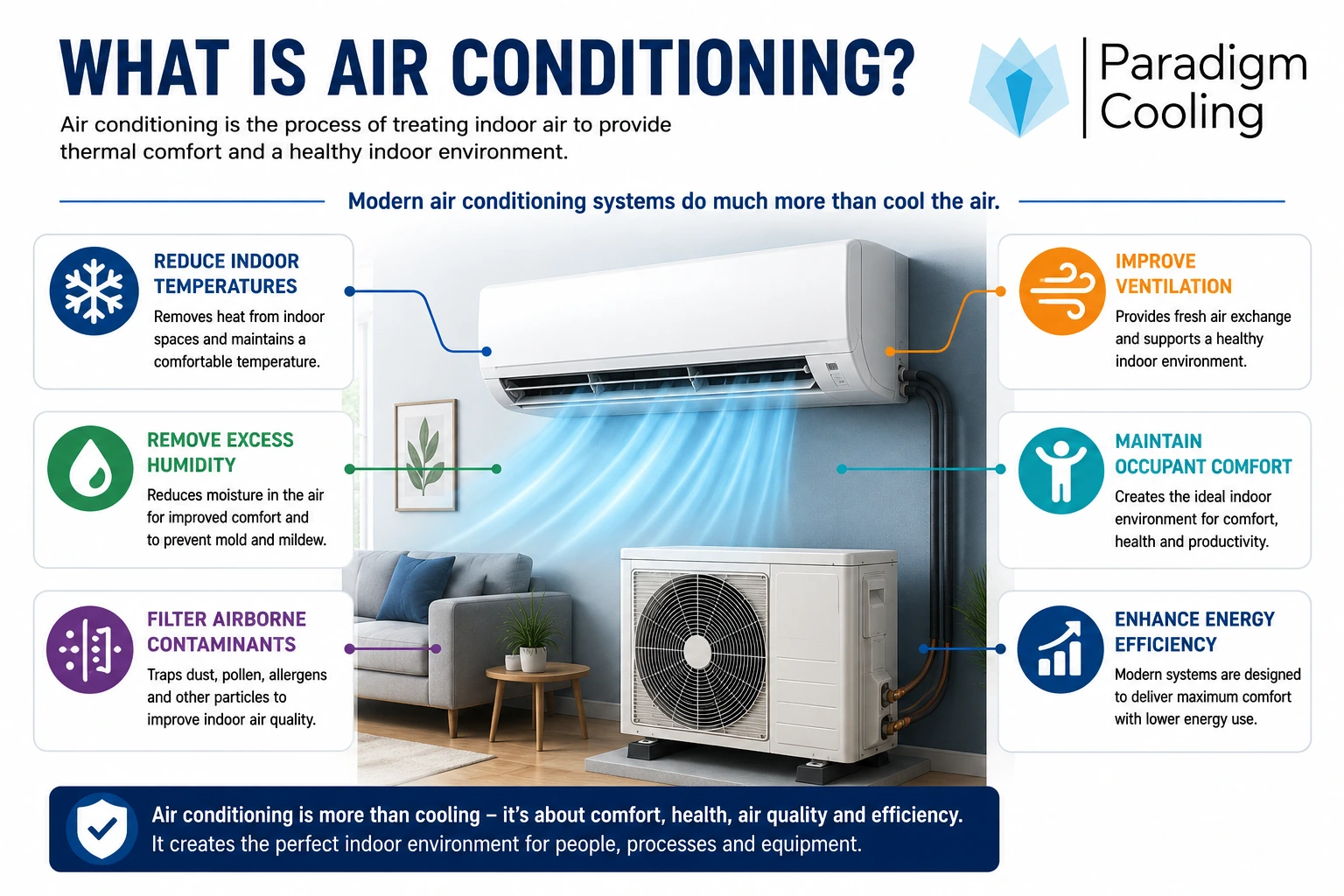
Air conditioning has become an indispensable element of contemporary living. It is widely utilized in various environments, including homes, offices, hospitals, hotels, shopping centers, schools, factories, and data centers. Air conditioning systems not only provide comfort but also enhance indoor air quality, control humidity, and create conducive environments that foster productivity and overall well-being. The importance of air conditioning extends beyond mere temperature regulation, as it plays a vital role in health and comfort.
Although many individuals perceive air conditioning as a simple means of cooling, modern HVAC systems are remarkably sophisticated and perform a variety of essential functions. Beyond controlling temperature, these systems are designed to manage humidity levels, filter airborne contaminants, ensure adequate ventilation, optimize airflow, and enhance energy efficiency. The complexity of these functions underscores the necessity for a comprehensive understanding of air conditioning technology.
As air conditioning technology continues to advance, it is crucial for technicians to cultivate a robust understanding of system operation, refrigeration principles, installation procedures, commissioning practices, diagnostics, maintenance requirements, and modern control technologies. This knowledge is essential for effective troubleshooting and maintenance of HVAC systems, ensuring they operate efficiently and reliably throughout their lifespan.
This comprehensive guide aims to elucidate the fundamentals of air conditioning, detailing system components, installation best practices, commissioning procedures, maintenance requirements, troubleshooting methods, and strategies for enhancing energy efficiency. By providing this information, the guide serves as a valuable resource for anyone involved in the HVAC industry.
Whether you are an apprentice, technician, contractor, facility manager, homeowner, or HVACR professional, this guide is designed to help you gain a deeper understanding of modern air conditioning systems. It will equip you with the knowledge necessary to navigate the complexities of air conditioning technology and improve the comfort and efficiency of indoor environments.
What Is Air Conditioning?
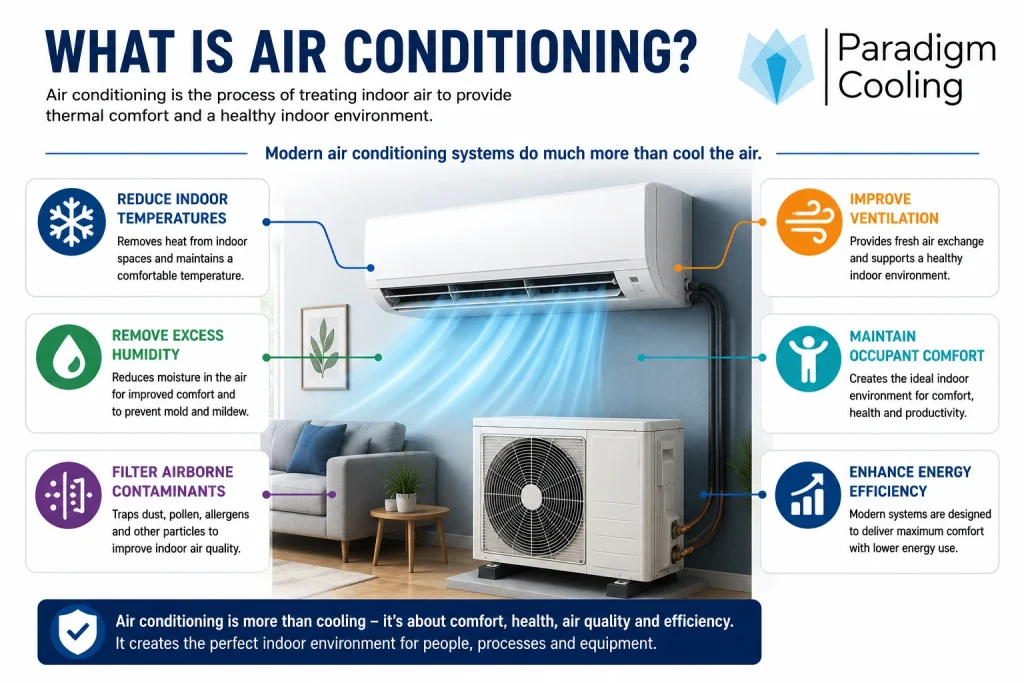
Air conditioning refers to the process of controlling indoor environmental conditions to achieve optimal comfort, promote health, and enhance productivity. This encompasses not only cooling the air but also regulating other vital factors that contribute to a pleasant indoor atmosphere.
Modern air conditioning systems are meticulously designed to perform a variety of functions, including:
- Reduce indoor temperatures
- Remove excess humidity
- Filter airborne contaminants
- Improve indoor air quality
- Maintain occupant comfort
- Support sensitive equipment and processes
Air conditioning is utilized in both residential and commercial settings across the globe. Its application is crucial for creating comfortable and healthy indoor environments in a variety of situations.
Why Air Conditioning Is Important
Air conditioning offers numerous important benefits that contribute to improved living and working conditions. Its significance cannot be overstated, especially in regions prone to extreme heat and humidity.
Comfort
One of the primary advantages of air conditioning is its ability to maintain comfortable indoor temperatures during hot weather. This not only enhances personal comfort but also supports overall health and well-being by preventing heat-related illnesses and discomfort.
Humidity Control
Air conditioning systems effectively reduce excess moisture in the air, which significantly improves comfort levels. Proper humidity control is essential for creating a pleasant indoor environment and can also prevent the growth of mold and mildew.
Indoor Air Quality
Air conditioning systems play a critical role in improving indoor air quality by removing dust, allergens, and airborne contaminants. This filtration process contributes to a healthier living environment, reducing the risk of respiratory issues and allergies.
Productivity
By providing a comfortable and controlled atmosphere, air conditioning boosts concentration and enhances workplace performance. When employees are comfortable, they are more likely to be productive and efficient in their tasks.
Equipment Protection
Air conditioning systems maintain suitable conditions for sensitive electronics, servers, and manufacturing processes. This protection is vital for preventing overheating and ensuring the longevity of equipment, ultimately saving costs related to repairs and replacements.
How Air Conditioning Works
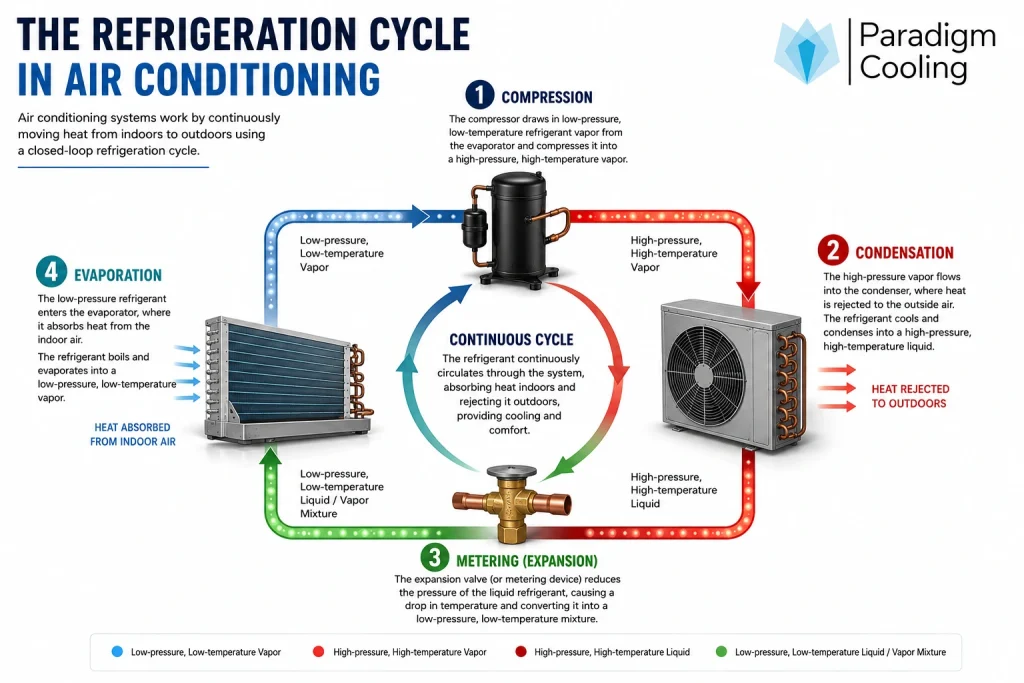
Air conditioning systems operate based on the refrigeration cycle, a fundamental process that enables these systems to cool and dehumidify indoor air effectively. Understanding this cycle is essential for grasping how air conditioning technology functions.
The refrigeration cycle consists of four primary stages:
- Compression
- Condensation
- Metering
- Evaporation
During this cyclical process, the system absorbs heat from indoor spaces and expels it outdoors. This continuous heat transfer creates the cooling effect that is essential for maintaining comfortable indoor temperatures.
The Refrigeration Cycle in Air Conditioning
Compression
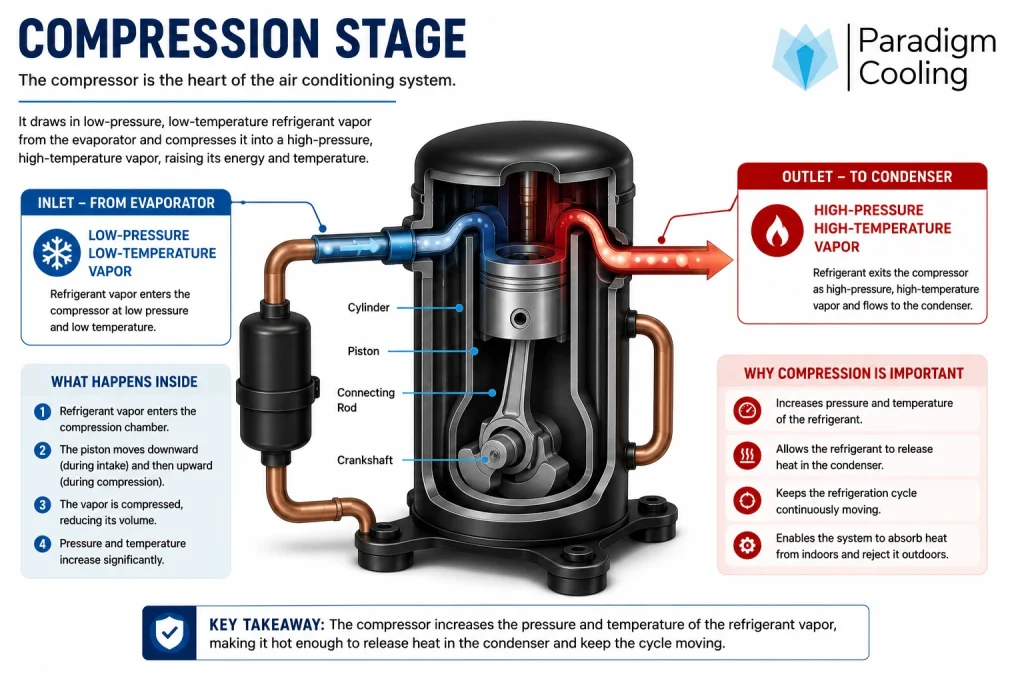
The compressor is responsible for drawing low-pressure refrigerant vapor from the evaporator and compressing it into a high-pressure, high-temperature vapor. This step is crucial, as the compressor drives the entire refrigeration cycle, providing the necessary force for heat transfer.
Condensation
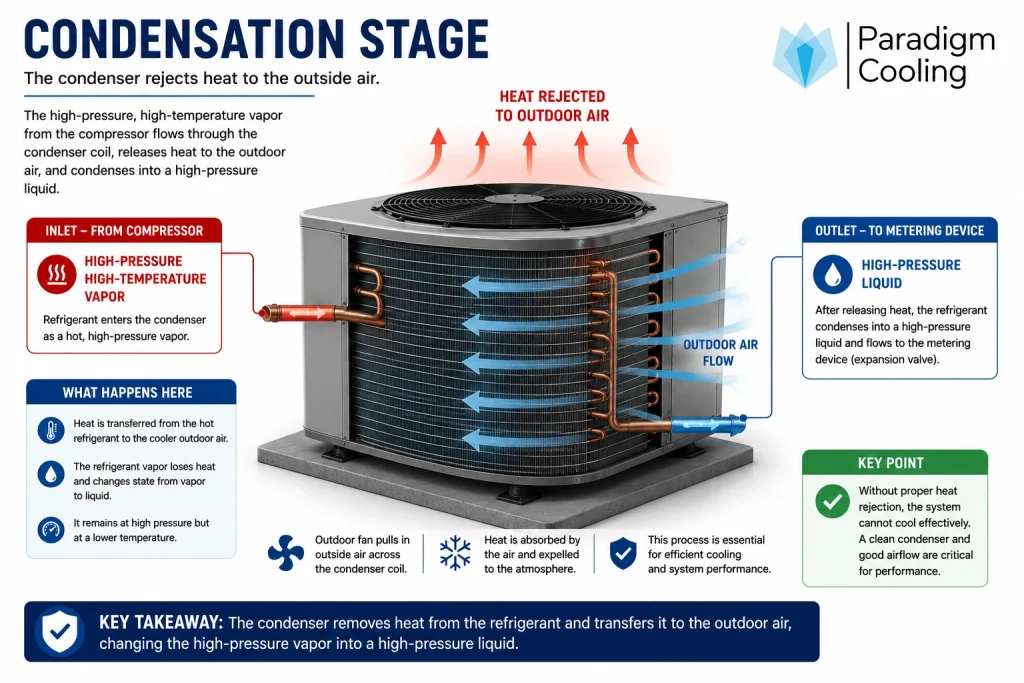
In the condensation phase, the condenser rejects heat into the outdoor environment. As heat is removed from the refrigerant, it undergoes a phase change, transitioning from vapor to liquid, which is vital for the cooling process.
Metering
The metering device plays a crucial role in the refrigeration cycle by reducing refrigerant pressure. This pressure reduction allows the refrigerant to cool down before it re-enters the evaporator, enhancing the overall efficiency of the system.
Evaporation
During the evaporation stage, the evaporator absorbs heat from the indoor air. As the refrigerant absorbs this heat, it boils and returns to a vapor state, creating the cooling effect that is essential for maintaining a comfortable indoor environment.
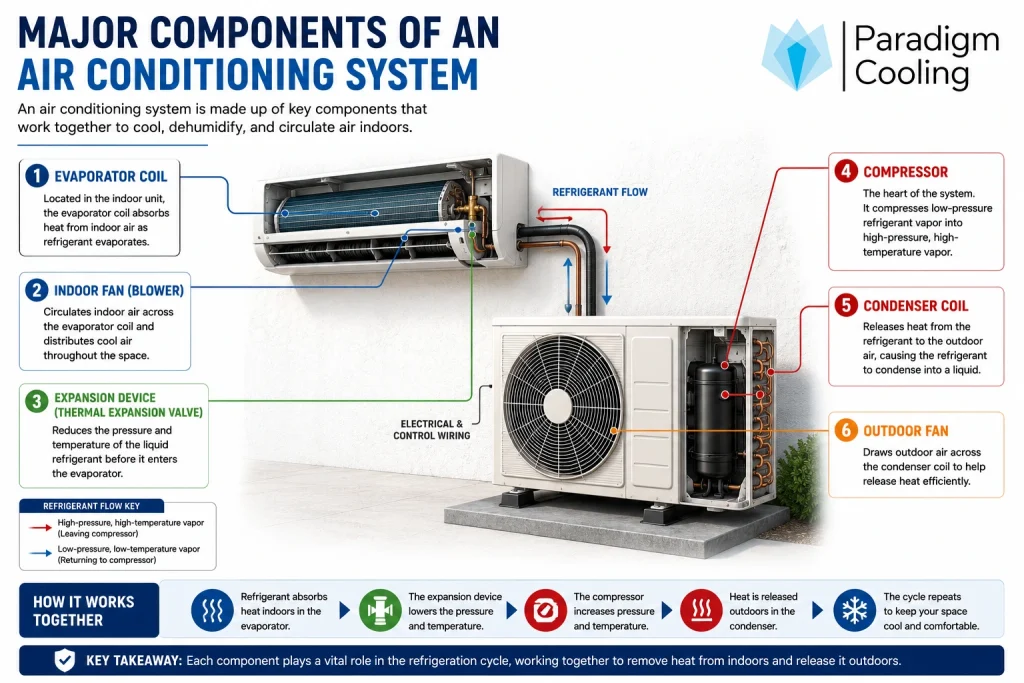
Major Air Conditioning Components
Compressor
The compressor is a vital component of the air conditioning system, serving several key functions:
- Circulates refrigerant
- Maintains pressure differences
- Drives heat transfer
Often referred to as the heart of the system, the compressor is essential for ensuring the effectiveness of the entire air conditioning process.
Condenser
The condenser is another crucial component of the air conditioning system, serving several important roles:
- Rejects heat
- Condenses refrigerant vapor
- Supports system efficiency
For reliable operation, it is essential to keep condensers clean, as any buildup can hinder their efficiency.
Metering Device
The metering device is responsible for controlling the flow of refrigerant through the system. Its functions include:
- Controls refrigerant flow
- Regulates evaporator feeding
- Maintains pressure differences
Common examples of metering devices include thermostatic expansion valves (TXVs), electronic expansion valves, and capillary tubes, each serving to optimize the refrigerant flow through the system.
Evaporator
The evaporator plays a vital role in the air conditioning process by:
- Absorbing indoor heat
- Produces cooling
- Removes moisture from the air
To achieve optimal performance, proper airflow across the evaporator is essential, as it directly influences the cooling efficiency of the system.
Indoor Fan
The indoor fan is responsible for distributing conditioned air throughout the occupied space. Its effective operation is crucial for maintaining consistent temperatures and ensuring that all areas receive adequate cooling.
Outdoor Fan
The outdoor fan enhances the heat rejection process at the condenser. By improving airflow over the condenser coils, it aids in the efficient removal of heat, which is vital for the overall performance of the air conditioning system.
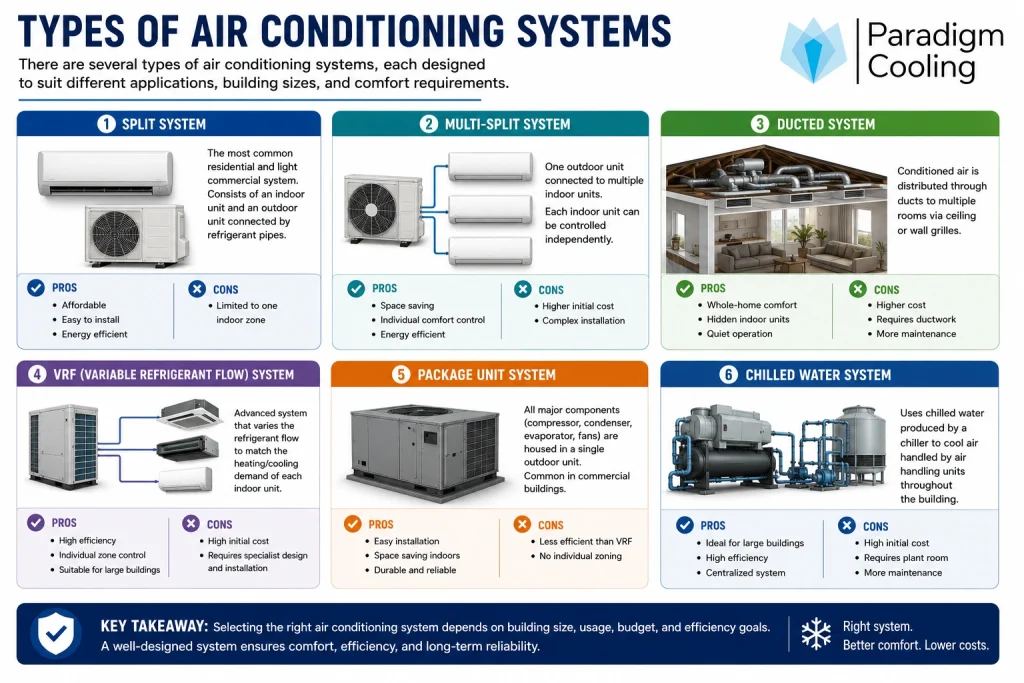
Types of Air Conditioning Systems
Split Air Conditioning Systems
Split air conditioning systems are among the most common types found in residential and commercial applications. They typically consist of two main components:
- Indoor unit
- Outdoor unit
The advantages of split systems include:
- Energy efficiency
- Quiet operation
- Easy installation
Multi-Split Systems
Multi-split systems feature one outdoor unit that serves multiple indoor units. This design offers several advantages:
- Space savings
- Flexible zoning
Ducted Air Conditioning Systems
Ducted air conditioning systems utilize ductwork to distribute conditioned air throughout the space. They are commonly found in:
- Offices
- Large homes
- Commercial buildings
The advantages of ducted systems include:
- Uniform temperature control
- Improved aesthetics
VRF and VRV Systems
Variable Refrigerant Flow (VRF) systems provide advanced capacity control for varying cooling needs. The advantages of these systems include:
- High efficiency
- Individual zone control
- Excellent part-load performance
These systems are commonly used in:
- Hotels
- Offices
- Commercial buildings
Package Units
Package units are self-contained systems that are commonly utilized in commercial applications. Their advantages include:
- Compact installation
- Simplified maintenance
Chilled Water Systems
Chilled water systems are frequently used in large commercial facilities due to their efficiency in cooling. Common applications include:
- Hospitals
- Shopping centers
- Industrial facilities
Airflow Fundamentals
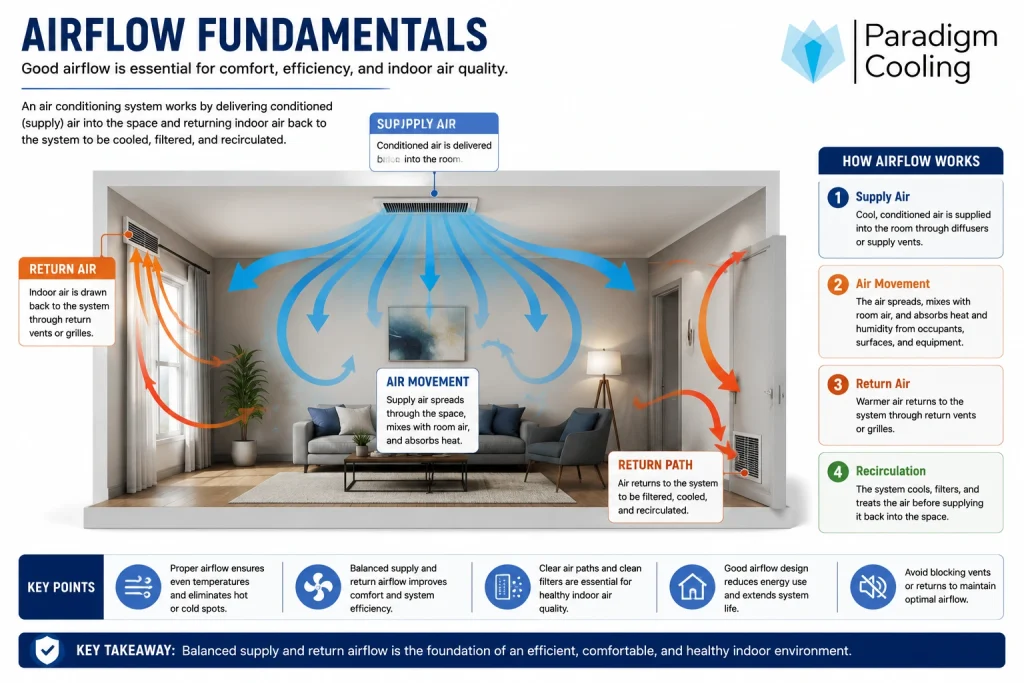
Airflow is a critical factor in the performance of air conditioning systems. Proper airflow directly influences various aspects of the system's operation:
- Improves heat transfer
- Enhances comfort
- Reduces energy consumption
- Protects equipment
Conversely, poor airflow can lead to numerous issues, including:
- Reduced cooling
- Ice formation
- High energy usage
- Compressor damage
Humidity Control
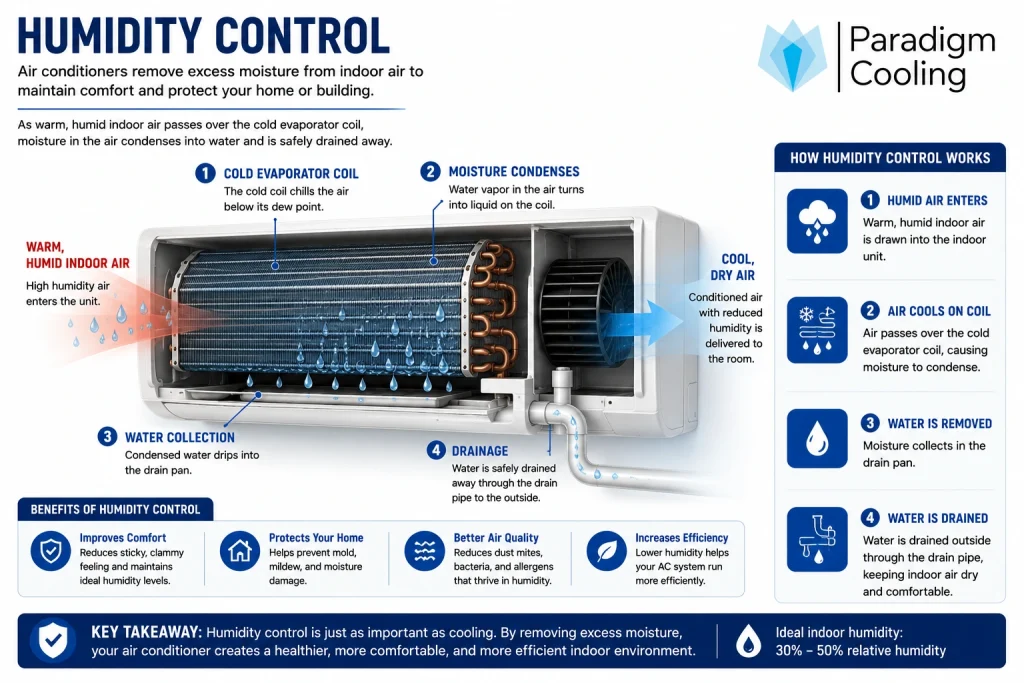
Air conditioning systems are designed to effectively remove moisture from indoor air, thereby controlling humidity levels. Proper humidity control serves several important purposes:
- Improves comfort
- Prevents mold growth
- Protects building materials
- Enhances indoor air quality
Excess humidity can significantly reduce the system's effectiveness and compromise occupant comfort. Maintaining optimal humidity levels is essential for both comfort and system performance.
Indoor Air Quality
Modern HVAC systems are instrumental in contributing to improved indoor air quality. They employ various methods to achieve this, including:
- Air filtration
- Ventilation
- Humidity control
- Air purification
Maintaining good indoor air quality is crucial as it directly impacts the health and comfort of occupants. The right balance of air quality can lead to a more pleasant and productive indoor environment.
Air Conditioning Installation Best Practices
Proper installation is essential for the optimal performance of air conditioning systems. Technicians must ensure that several key factors are addressed during the installation process:
- Correct equipment sizing
- Proper refrigerant piping
- Adequate airflow
- Proper electrical connections
- Correct drainage
- Appropriate system location
Many performance problems can be traced back to issues that arise during the installation phase. Therefore, meticulous attention to detail is required to ensure that all installation practices meet the highest standards.
Air Conditioning Commissioning
Commissioning is a critical process that verifies the proper operation of air conditioning systems. Technicians should perform thorough checks to ensure that all components function as intended:
To evaluate refrigeration performance, technicians should verify:
Refrigeration Performance
- Refrigerant charge
- Superheat
- Subcooling
- Operating pressures
In terms of electrical performance, technicians should verify:
Electrical Performance
- Voltage
- Current draw
- Protection devices
For mechanical performance, it is essential to check:
Mechanical Performance
- Fan operation
- Airflow
- Vibration
Finally, technicians should verify control performance by checking:
Control Performance
- Thermostat calibration
- Controller operation
- Communication systems
Proper commissioning significantly enhances the reliability of air conditioning systems, ensuring they operate efficiently and effectively over time.
Refrigerant Charging
The refrigerant charge is a critical factor that directly affects several aspects of system performance, including:
- Cooling capacity
- Energy efficiency
- Compressor protection
- System reliability
Technicians should evaluate the refrigerant charge by measuring:
- Superheat
- Subcooling
- Pressures
- Temperatures
Charging by pressure alone is not recommended, as it does not provide a complete picture of the refrigerant charge status.
Understanding Superheat and Subcooling
Superheat is a crucial measurement that helps technicians evaluate:
- Evaporator performance
- Refrigerant flow
- Compressor protection
Conversely, subcooling is used to assess:
- Condenser performance
- Refrigerant charge condition
- System efficiency
Together, superheat and subcooling provide valuable diagnostic information that assists technicians in maintaining optimal system performance.
Common Air Conditioning Faults
Refrigerant Undercharge
Common symptoms of refrigerant undercharge include:
- Reduced cooling
- High superheat
- Low suction pressure
Refrigerant Overcharge
Symptoms of refrigerant overcharge can include:
- High head pressure
- Elevated energy consumption
- High subcooling
Dirty Filters
Symptoms associated with dirty filters include:
- Reduced airflow
- Poor cooling
- Increased energy consumption
Dirty Condensers
Common symptoms of dirty condensers include:
- High operating pressures
- Compressor overheating
- Reduced efficiency
Evaporator Ice Formation
The symptoms of evaporator ice formation can include:
- Reduced airflow
- Poor cooling performance
Common causes of this issue include airflow restrictions and refrigerant problems that interfere with the system's ability to function properly.
Electrical Faults
Symptoms indicative of electrical faults may include:
- Failure to start
- Intermittent operation
- Tripped breakers
Drainage Problems
Symptoms of drainage problems can include:
- Water leaks
- Indoor damage
- System shutdowns
Air Conditioning Troubleshooting Procedure
When diagnosing faults in an air conditioning system, technicians should follow a systematic procedure to ensure thoroughness and accuracy:
Step 1
Verify the complaint to understand the specific issue being reported.
Step 2
Inspect airflow to ensure it is adequate and functioning properly.
Step 3
Check filters for cleanliness and proper operation.
Step 4
Measure pressures to assess system performance accurately.
Step 5
Measure superheat to evaluate refrigerant flow and system health.
Step 6
Measure subcooling to ensure proper refrigerant charge condition.
Step 7
Check electrical performance to ensure all components are operating correctly.
Step 8
Verify controller operation to ensure the system responds accurately to settings.
Step 9
Inspect condensate drainage to prevent water damage and ensure proper operation.
Step 10
Determine the root cause of the issue before replacing any components. A thorough analysis is essential for effective repairs.
Systematic diagnostics improve repair accuracy and help prevent future issues, ensuring the longevity and reliability of the air conditioning system.
Preventative Maintenance for Air Conditioning Systems
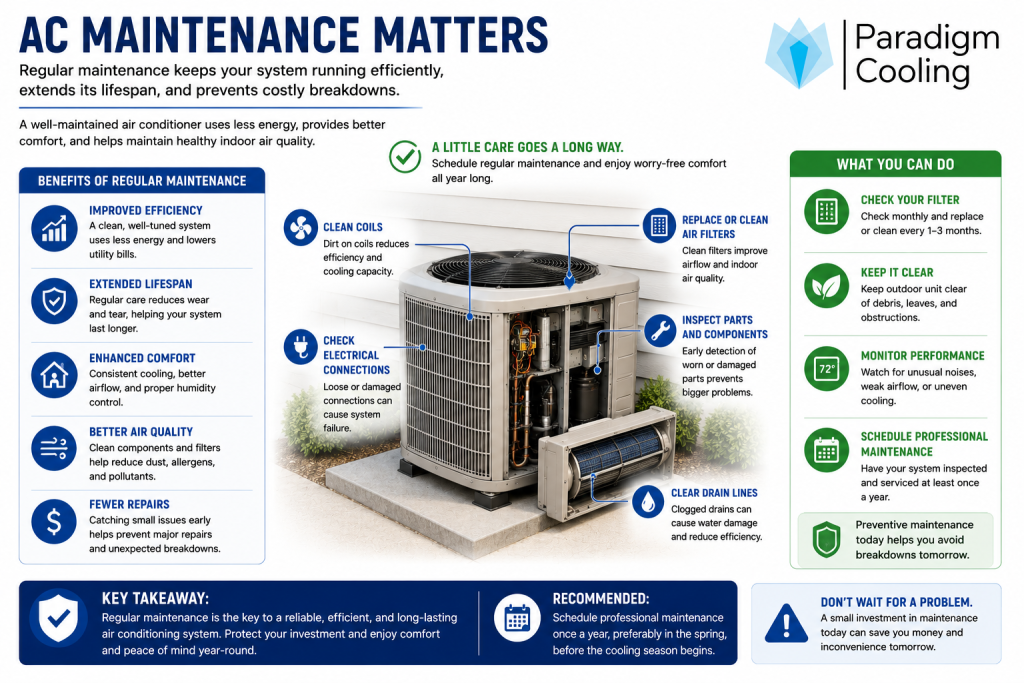
Regular maintenance is crucial for the longevity and efficiency of air conditioning systems. A well-planned maintenance schedule should include several key components to ensure optimal operation.
- Regular cleaning or replacement of filters is essential for maintaining optimal air conditioning performance. Dirty filters can significantly reduce airflow and efficiency, leading to increased energy costs and discomfort. It is advisable to check filters monthly, especially during peak usage seasons, and replace or clean them as necessary. Keeping filters clean ensures that the air conditioning system operates efficiently and prolongs its lifespan. This simple maintenance step can make a substantial difference in the overall effectiveness of the system.
- Cleaning the condenser is another crucial aspect of air conditioning maintenance. The condenser is responsible for releasing heat absorbed from the indoor air, and if it is blocked by dirt or debris, it cannot function properly. Regularly inspecting and cleaning the condenser unit enhances its efficiency and prevents overheating. A clean condenser allows the system to operate at optimal performance, reducing wear and tear on the components. Ensuring this part is well-maintained is vital for the longevity and efficiency of the entire air conditioning system.
- Evaporator cleaning is equally important for maintaining an efficient air conditioning system. The evaporator coil absorbs heat from the indoor air to provide cooling, and dust accumulation can hinder its ability to do so. Regular cleaning of the evaporator coil ensures that the system remains efficient and effective in cooling the space. Neglecting this maintenance can lead to increased energy consumption as the system struggles to maintain the desired temperature. Keeping the evaporator clean not only improves system performance but also enhances indoor air quality.
- Conducting refrigerant inspections is vital to ensure that the air conditioning system operates efficiently. Proper refrigerant levels are essential for effective cooling, and low levels can indicate leaks or other issues. Regular inspections help to identify and rectify any refrigerant problems before they escalate into major failures. Maintaining the correct refrigerant charge not only enhances cooling performance but also increases energy efficiency. This proactive approach to maintenance can prevent costly repairs and improve overall system reliability.
- Electrical inspections are a critical component of air conditioning maintenance. These inspections help identify potential electrical issues that could lead to system failure or safety hazards. By checking wiring, connections, and electrical components regularly, technicians can ensure the safe operation of the air conditioning system. Addressing electrical problems promptly can prevent more significant issues down the line, safeguarding both the equipment and the occupants of the building. Regular electrical maintenance helps maintain system performance and enhances safety.
- Cleaning the drainage system is essential for preventing water buildup and potential damage within the air conditioning unit. Clogged drains can lead to water leaks, mold growth, and even system malfunctions. Regularly inspecting and clearing the drainage lines ensures that moisture is properly expelled from the unit, enhancing its functionality. This maintenance task not only prolongs the life of the system but also helps maintain a healthy indoor environment. Proper drainage management is a key factor in the effective operation of air conditioning systems.
- Verifying airflow is an important maintenance step that ensures the air conditioning system operates optimally. Poor airflow can result from various issues, including blocked ducts or dirty filters. By assessing and correcting airflow problems, technicians can enhance the system's efficiency and comfort levels. Regular airflow checks help identify potential problems before they become serious, leading to better performance and energy savings. Ensuring proper airflow is crucial for achieving the desired indoor climate.
- Testing the controller is an essential part of the maintenance routine for air conditioning systems. The controller regulates the operation of the system, and any malfunctions can lead to inefficient performance or complete system failure. By routinely testing the controller, technicians can ensure that the air conditioning system responds correctly to temperature settings and operates as intended. This proactive measure helps maintain comfort levels and energy efficiency. Addressing controller issues promptly can prevent more significant problems and ensure reliable system performance.
Preventative maintenance is crucial for enhancing the efficiency and reliability of air conditioning systems. Regular upkeep not only extends the lifespan of the equipment but also optimizes its performance. By addressing minor issues before they escalate, technicians can prevent costly repairs and ensure that systems operate at peak efficiency. This proactive approach ultimately leads to lower energy consumption and improved comfort for occupants. Implementing a structured maintenance plan is key to achieving long-term success with air conditioning systems.
Improving Air Conditioning Energy Efficiency
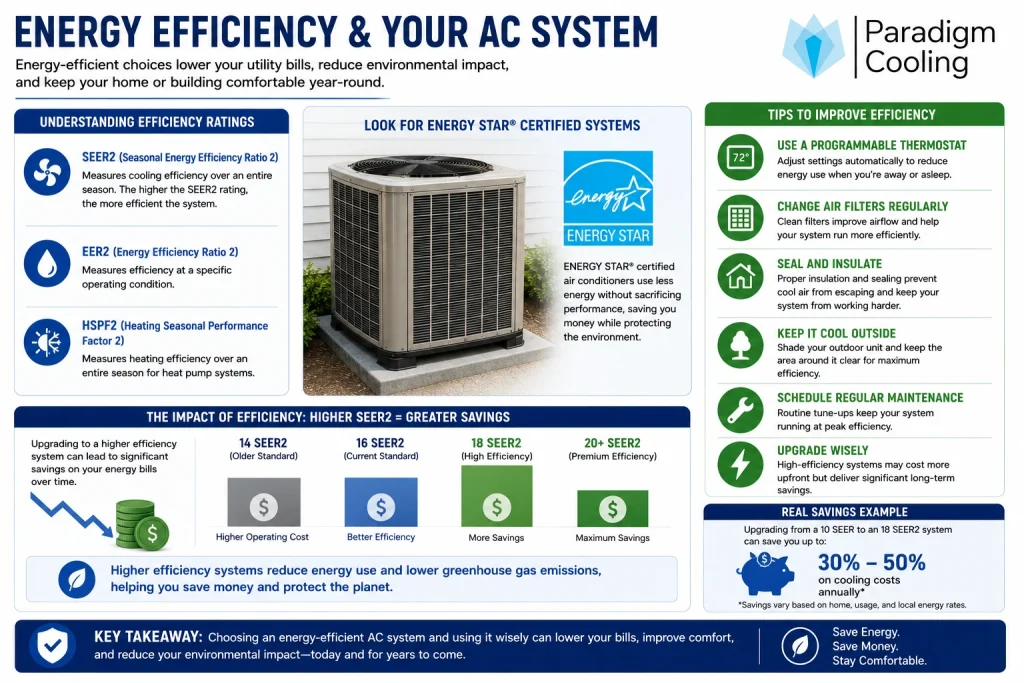
There are several effective strategies to improve energy efficiency in air conditioning systems. First and foremost, maintaining clean filters is essential, as dirty filters impede airflow and force the system to work harder, leading to increased energy consumption. Additionally, regularly cleaning the condensers ensures that heat can be effectively released, further enhancing energy efficiency. Verifying the refrigerant charge is another critical step, as the correct amount of refrigerant is vital for optimal cooling performance. Improving airflow throughout the system can significantly reduce energy usage, making it essential to inspect and clear ducts regularly. Furthermore, installing programmable controls allows users to adjust temperatures based on occupancy, thereby saving energy during unoccupied periods. Utilizing variable-speed equipment can enhance efficiency by allowing the system to operate at various speeds depending on demand. Lastly, conducting regular maintenance ensures that all components are functioning optimally, leading to significant energy savings over time.
- Maintaining clean filters
- Cleaning condensers
- Verifying refrigerant charge
- Improving airflow
- Installing programmable controls
- Using variable-speed equipment
- Performing regular maintenance
Small improvements in these areas can lead to significant energy savings, making it essential for both residential and commercial systems. By prioritizing energy efficiency, users can not only reduce their carbon footprint but also lower their utility bills, contributing to a more sustainable environment and enhancing overall system performance.
Smart Controls and Automation
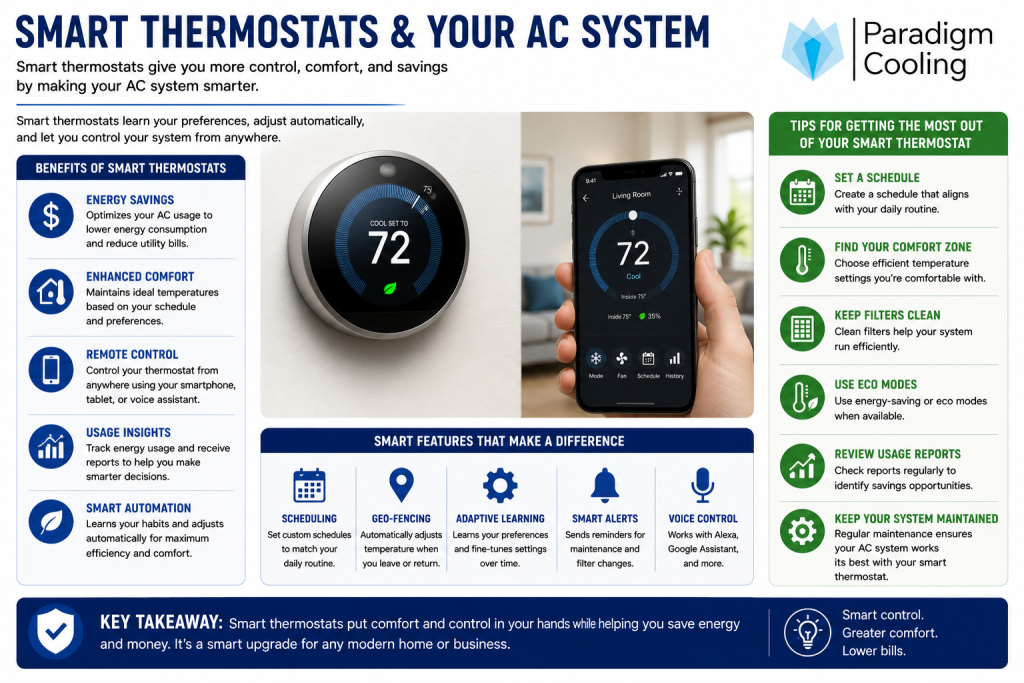
Modern air conditioning systems frequently incorporate advanced technologies that enhance efficiency and user experience. One such feature is WiFi controls, which allow users to manage their systems remotely via smartphones or tablets. Smart thermostats are another innovation that learns user preferences and adjusts temperatures accordingly, further optimizing energy use. Remote monitoring capabilities enable technicians to oversee system performance in real-time, allowing for proactive maintenance and troubleshooting. Additionally, energy management systems provide insights into energy consumption patterns, helping users make informed decisions to reduce waste. Building Management Systems (BMS) integrate various building operations, including HVAC, lighting, and security, to enhance overall efficiency and occupant comfort. These automation technologies represent a significant advancement in air conditioning, making systems smarter and more responsive to user needs.
- WiFi controls
- Smart thermostats
- Remote monitoring
- Energy management systems
- Building Management Systems (BMS)
The implementation of these smart controls and automation features significantly improves system efficiency and occupant comfort. By allowing for greater customization and control, these technologies enable users to create a more comfortable indoor environment while simultaneously reducing energy consumption.
Download Free Air Conditioning Resources
To support technicians and students in the HVACR field, a variety of free resources are available for download. These resources include the HVACR Diagnostic Checklist, which serves as a comprehensive guide for troubleshooting common issues within air conditioning systems. The Refrigeration Cycle Quick Reference Guide provides essential information for understanding the refrigeration process, while the Superheat & Subcooling Worksheet assists in mastering these critical concepts. Additionally, the HVACR Multimeter Cheat Sheet offers valuable tips for using multimeters effectively, and the Compressor Fault Diagnosis Sheet aids in identifying and resolving compressor-related problems. These resources are designed to provide practical support for installation, maintenance, and troubleshooting tasks.
- HVACR Diagnostic Checklist
- Refrigeration Cycle Quick Reference Guide
- Superheat & Subcooling Worksheet
- HVACR Multimeter Cheat Sheet
- Compressor Fault Diagnosis Sheet
These resources provide invaluable practical support for anyone involved in the installation, maintenance, and troubleshooting of air conditioning systems, helping to build a strong foundation of knowledge and skills.
Watch the Air Conditioning Training Series
For those seeking practical demonstrations of air conditioning concepts, the Paradigm Cooling YouTube channel offers a comprehensive training series. This series includes videos on air conditioning installation, commissioning, maintenance, refrigerant charging, diagnostics, and troubleshooting procedures. Each video provides real-world examples that complement the theoretical concepts discussed in this guide, making it easier for viewers to understand and apply the information. By watching these training videos, technicians can gain valuable insights and enhance their practical skills in the field. The visual format of the training series makes learning engaging and accessible for all viewers.
Our training videos are designed to provide real-world examples that effectively illustrate the concepts discussed in this guide. This approach helps to bridge the gap between theory and practice, allowing technicians to apply what they have learned in actual working environments.
Air Conditioning Systems eBook — Coming Soon
The complete Air Conditioning Systems eBook is currently in production and will be released in the Paradigm Cooling digital store. This eBook expands on various topics, including air conditioning fundamentals, installation procedures, refrigerant charging, and commissioning practices. It also covers maintenance strategies, diagnostics, troubleshooting techniques, and the latest in controls and automation. Furthermore, the eBook delves into energy efficiency optimization, providing valuable insights into how to enhance system performance while reducing energy consumption. This resource is ideal for both novices and seasoned professionals seeking to broaden their understanding of air conditioning systems.
The eBook serves as a valuable tool for anyone interested in HVACR, providing a wealth of knowledge that equips readers to tackle challenges in air conditioning systems effectively. By exploring these topics in depth, readers can develop a robust understanding of the principles that govern air conditioning systems.
Real-World Lessons from the Field
Many air conditioning failures can be attributed not to defective equipment, but rather to issues related to installation and maintenance. For instance, poor airflow can often result from improper installation or neglecting regular maintenance tasks. The incorrect refrigerant charge is another common issue, as it can severely impact system performance and efficiency. Blocked drains, which can lead to water damage and system malfunctions, are often overlooked during routine checks. Additionally, dirty condensers and improper commissioning can significantly hinder the system's ability to function optimally. Technicians who prioritize system performance and focus on comprehensive maintenance strategies consistently achieve better results and customer satisfaction.
Successful HVACR professionals recognize that every air conditioning system should be evaluated as an integrated whole rather than a mere collection of individual components. This holistic approach allows technicians to identify underlying issues that may not be immediately apparent and address them effectively. By understanding how various parts of the system interact, technicians can implement solutions that enhance overall performance and efficiency. This perspective not only leads to improved outcomes for clients but also fosters a deeper understanding of the HVACR field.
Go Deeper: Advanced Refrigeration Troubleshooting
A large share of low-on-gas call-outs turn out to be airflow. Advanced Refrigeration Troubleshooting — A Field Reference for Refrigeration Diagnostics is a 141-page field reference built for exactly this kind of diagnosis: target values, fault matrices and worked examples you can use on site, drawn from 28 years in the trade.
Final Thoughts
Air conditioning systems are integral to the comfort and functionality of modern homes, businesses, and industrial facilities. A comprehensive understanding of refrigeration principles, airflow dynamics, humidity control strategies, installation procedures, commissioning practices, maintenance requirements, and troubleshooting techniques empowers technicians to significantly enhance system performance. This knowledge allows for reduced energy consumption and improved comfort for occupants, which is essential in today’s energy-conscious world. Mastering the fundamentals of air conditioning provides a solid foundation for success in the HVACR industry and paves the way for advanced technologies, such as VRF systems, building automation, energy management, and smart controls. For all HVACR professionals, a deep understanding of air conditioning systems remains one of the most valuable technical skills that can be developed, ensuring they are well-equipped to address the challenges of the industry.
More on this from the articles blog
Air conditioning articles covering selection, installation and faults.
6 thoughts on “Air Conditioning Systems: The Complete Guide to Installation, Operation, Maintenance, and Troubleshooting”