
Last updated on August 28th, 2026 at 07:12 pm

If you’ve noticed the lights on your Daikin air conditioner flashing, it could signal a problem. Understanding these flashes can save you from discomfort and potential costly repairs. Let’s delve into why your Daikin air conditioning light might be flashing and what you can do about it.
Introduction to Daikin Air Conditioning Systems
Daikin air conditioning systems are renowned for their efficiency, reliability, and innovative technology. They’re designed to provide optimal comfort while minimizing energy consumption. However, like any complex appliance, they can encounter issues over time. These issues may be a result of poor maintenance practices or simple wear and tear in an aging system. Either way, it is important that we understand the reasons behind the issues that cripple air conditioning systems in our homes and offices.
Understanding Daikin’s Error Codes
Daikin air conditioners are equipped with diagnostic systems that use flashing lights to indicate specific error codes. These codes provide valuable information about the nature of the problem, allowing for targeted troubleshooting and repairs. This allows technicians to accurately diagnose problems with your system in a fraction of the time. There is a fuller treatment, with the target figures, in our refrigeration troubleshooting handbook.
Common Reasons for Flashing Lights
Flashing lights on your Daikin air conditioner can indicate various issues, including sensor malfunctions, refrigerant leaks, compressor problems, or electrical faults. Identifying the specific error code is the first step in diagnosing the problem. We look at this more closely in How to Test a Single-Phase Compressor (Without a Wiring Diagram).
Interpreting Flashing Light Patterns
Each flash pattern corresponds to a specific error code. For example, a single flash followed by a pause may indicate a communication error, while a continuous, fast flash might signal a refrigerant leak. Consulting your Daikin user manual or contacting a professional can help decipher these patterns.
How do I read the error code on my Daikin air conditioning system?
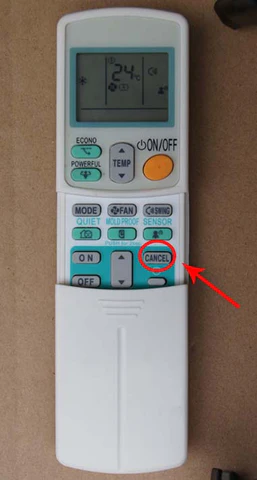
In order to extract the error code from a Daikin remote controller, hold the “Cancel” button down for about 5 seconds until “00” blinks in the temperature display section. Press “Cancel” repeatedly until a long beep is produced by the controller, and the corresponding code at the time of the beep is the applicable error code.
Taking Immediate Action
Ignoring flashing lights on your Daikin air conditioner can lead to further damage and decreased efficiency. If you notice any abnormal flashing patterns, it’s crucial to address the issue promptly to prevent costly repairs down the line.
Decoding Your System’s Errors
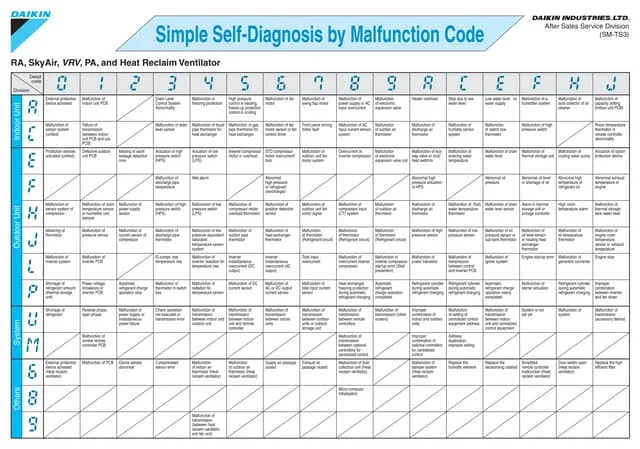
The following table represents the error codes that you may encounter, as well as their meaning:
DIY Troubleshooting Tips
Before calling a technician, there are a few steps you can take to troubleshoot the issue. Start by checking the air filter for dirt or blockages, inspecting the outdoor unit for debris, and ensuring that the thermostat is set correctly. Sometimes, simple fixes can resolve the problem.
Daikin Troubleshooting Tips For Homeowners
The following troubleshooting chart can help homeowners identify problems with their system.
| FAULT LOCATION | CODE | MEANING | SUGGESTED ACTION |
|---|---|---|---|
| System | 00 | Normal | None |
| System | UA | Indoor-Outdoor Unit Combination Fault | Check indoor and outdoor unit model numbers and replace the mismatched unit with the correct one. |
| System | U0 | Refrigerant Shortage | Pressure test system, perform a leak test, repair the leak, and perform a vacuum decay test before charging the system with refrigerant. |
| System | U2 | Outdoor Unit Inverter PCB DC Voltage Shortage | Test the input voltage on the inverter PCB, run functional tests on the inverter PCB, and replace it if necessary. |
| System | U4 | Communication Error between indoor and outdoor units | Check for a break in the communication cable between the indoor and outdoor units. If no break is detected, contact your local Daikin technician to walk you through the dip switch settings that will identify which one of the indoor/outdoor PCB’s needs to be replaced. |
| Indoor Unit | A1 | Defective Indoor PC Board | Replace Indoor PCB |
| Indoor Unit | A5 | Freeze-Up Protection | Check the condition of the air filter, check the operation of the evaporator fan motor and check the temperature settings on your system. A fault in any one of these will result in your evaporator coil icing up. |
| Indoor Unit | A6 | Fan Motor Fault | Test the fan’s start capacitor for functionality. If the test comes back positive, replace the faulty indoor fan motor. |
| Indoor Unit | C4 | Indoor Liquid Coil (R2T) Thermistor error | Test the resistance on the R2T Thermistor and replace if it is outside the manufacturer’s parameters. |
| Indoor Unit | C9 | Indoor Return Air (R1T) Thermistor error | Test the resistance on the R1T Thermistor and replace if it is outside the manufacturer’s parameters. |
| Outdoor Unit | E1 | Circuit Board Fault | Test the input voltage on the outdoor unit circuit board. If the input voltage is correct, then replace the faulty PCB. |
| Outdoor Unit | E5 | Inverter Compressor Overcurrent | Check the input voltage on the compressor. Check for a low refrigerant charge in the system. Check the condition of the condenser. If all of these are within an accepted operating range, the |
| Outdoor Unit | E6 | Compressor Start Up Fault | Check the input voltage to the compressor. If the voltage is within an acceptable range, test the compressor windings and replace the compressor if the windings fail the tests. |
| Outdoor Unit | E7 | DC Fan Motor Fault | Check the input voltage to the fan motor. If the voltage is correct, replace the faulty fan motor. |
| Outdoor Unit | E8 | Overcurrent Input | Check the input voltage to the Outdoor unit PCB. Test Inverter PCB. Test compressor windings and replace it if the results fall outside of accepted operational parameters. |
| Outdoor Unit | F3 | High-Temperature Discharge Pipe Control | Check the condition of the condenser coil and clean it if necessary. Check the refrigerant charge. Check the operational condition of the condenser fan motor. |
| Outdoor Unit | F6 | High-pressure alarm (Cooling Mode) | Check the condition of the condenser coil and clean it if necessary. Check the operational condition of the condenser fan motor. Check the refrigerant charge. Check the condition of the pressure sensor. |
| Outdoor Unit | H0 | Sensor Fault | Test the outdoor unit’s current sensor and replace it if necessary. |
| Outdoor Unit | H6 | Operation Halt due to faulty position detection sensor | Check condition of the communication cable. Check the functionality of the outdoor PCB. test the compressor windings. |
| Outdoor Unit | H8 | DC Current Sensor fault | Check the input voltage to the unit. Check the condition of the outdoor unit wiring. Test the functionality of the outdoor PCB. |
| Outdoor Unit | H9 | Faulty suction air temperature sensor | Check the resistance of the outdoor unit suction air thermistor and replace it if necessary. |
| Outdoor Unit | J3 | Faulty discharge pipe temperature sensor | Check the resistance of the outdoor unit discharge pipe thermistor and replace it if necessary. |
| Outdoor Unit | J6 | Faulty heat exchanger temperature sensor | Check the resistance of the outdoor unit heat exchanger thermistor and replace it if necessary. |
| Outdoor Unit | L3 | Electrical system overheat fault | Check the condition of the compressor wiring. Check the functionality of the condenser fan motor. Test the inverter PCB and replace it if necessary. |
| Outdoor Unit | L4 | High temperature at inverter circuit heatsink | Check the condition and distribution of the heatsink’s thermal paste. Check for heatsink short circuit. Test the functionality of the inverter circuit thermistor and replace it if necessary. |
| Outdoor Unit | L5 | Output overcurrent | Check the input voltage at the outdoor unit. Test the inverter PCB. Test the compressor winding and replace it if necessary. |
| Outdoor Unit | P4 | Faulty inverter circuit heatsink temperature sensor | Bench test the heatsink temperature sensor and replace it if necessary. |
When to Call a Professional
If you’re unable to resolve the issue on your own or if the error persists, it’s best to seek assistance from a qualified HVAC technician. Attempting to repair complex problems without the necessary expertise can worsen the issue and pose safety risks.
Preventive Maintenance Practices
Regular maintenance is key to keeping your Daikin air conditioner running smoothly. Schedule annual inspections and tune-ups to detect and address potential issues before they escalate. Cleaning the coils, checking refrigerant levels, and lubricating moving parts can prolong the lifespan of your system.
Ensuring Proper Installation
Proper installation is critical for the optimal performance of your Daikin air conditioning system. Ensure that the unit is installed by a licensed professional according to manufacturer specifications. Improper installation can result in airflow problems, leaks, and electrical issues, among others.
Utilizing Warranty Coverage
If your Daikin air conditioner is still under warranty, take advantage of the coverage for any repairs or replacements needed due to flashing lights or other issues. Familiarize yourself with the warranty terms and conditions to understand what is covered and what isn’t.
Conclusion: Addressing Flashing Lights on Your Daikin Air Conditioner
Flashing lights on your Daikin air conditioner serve as warning signals for potential problems. By understanding these error codes, taking proactive measures, and seeking professional assistance when needed, you can ensure efficient operation and a prolonged lifespan of your HVAC system. Don’t ignore the lights; they’re your system’s way of communicating its needs.

+ There are no comments
Add yours