
Last updated on August 27th, 2026 at 01:43 pm
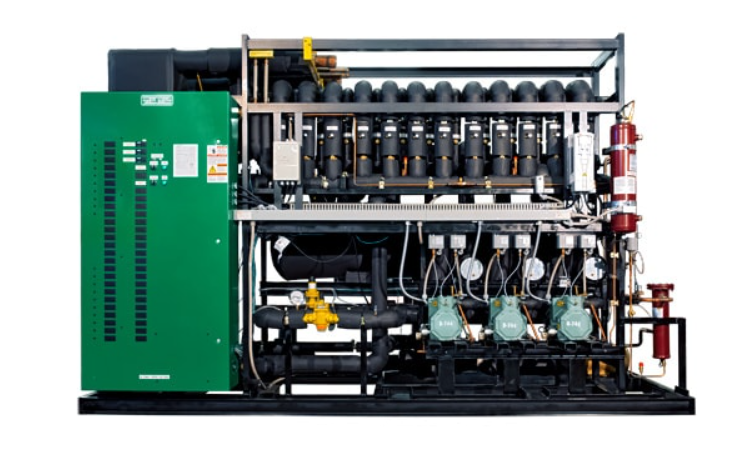
Modern refrigeration systems have witnessed a paradigm shift with the emergence of carbon dioxide (CO2) as a refrigerant, challenging the traditional reliance on hydrofluorocarbons (HFCs) and chlorofluorocarbons (CFCs). This article explores how the adoption of CO2 as a refrigerant is revolutionizing the field of refrigeration, leading to improved energy efficiency, lower environmental impact, and enhanced performance.
Efficiency and Environmental Benefits
Carbon dioxide, a natural and abundant compound, offers substantial benefits as a refrigerant. Unlike HFCs and CFCs, CO2 has an exceptionally low global warming potential (GWP) of 1, significantly reducing its carbon footprint. Additionally, its ozone depletion potential (ODP) is zero, further contributing to environmental sustainability.
CO2-based refrigeration systems employ a transcritical cycle, utilizing supercritical CO2, a state where it exhibits both liquid and gas properties. This unique characteristic allows for efficient heat transfer at higher temperatures than traditional refrigerants, resulting in improved system performance and energy efficiency. Furthermore, transcritical CO2 systems can effectively operate in a wide range of temperatures, making them suitable for various applications, from commercial refrigeration to industrial cooling.
Moreover, CO2 refrigeration systems have a higher heat transfer coefficient, meaning that they can transfer more heat with less energy consumption. This results in reduced operating costs and energy savings, making CO2 an attractive option for businesses striving to achieve sustainability goals.
Challenges and Advances in CO2 Refrigeration
While CO2 as a refrigerant offers numerous benefits, its adoption comes with certain challenges. Firstly, CO2 operates at higher pressures than traditional refrigerants, requiring the use of specialized components and materials to ensure system integrity and safety. However, technological advancements, such as the development of high-pressure valves and fittings, have overcome these challenges, making CO2 systems more reliable. our reference on refrigerant charging methods goes into this properly.
In addition, the higher costs associated with CO2 refrigeration systems have been a barrier to widespread adoption. As the demand for sustainable solutions grows and mass production achieves economies of scale, costs are gradually becoming more competitive.
To address concerns about the environmental impact of refrigerant leaks, CO2 systems are equipped with advanced monitoring and leak detection technologies. These systems use sensor networks to detect leaks promptly, preventing the potential release of greenhouse gases into the atmosphere. Furthermore, the recyclability of CO2 is a significant advantage, as it can be easily recovered, reused, or safely vented without harming the environment.
Impact on Modern Refrigeration
The adoption of CO2 as a refrigerant is causing a significant paradigm shift in the modern refrigeration industry. Many businesses, especially in the commercial and retail sectors, are transitioning to CO2-based refrigeration systems to meet sustainability targets and comply with stricter environmental regulations.
CO2 refrigeration systems are highly versatile and capable of serving a wide range of applications, from small-scale refrigerators to large commercial facilities. They are particularly effective in environments with high-temperature requirements, such as hot climates or refrigeration systems operating near cooking areas.
Furthermore, the use of CO2 as a refrigerant aligns with the increasing consumer demand for environmentally friendly products and services. Businesses that embrace CO2-based refrigeration systems can enhance their brand reputation, differentiate themselves in the market, and attract environmentally conscious consumers.
Conclusion
The adoption of carbon dioxide as a refrigerant marks a significant paradigm shift in modern refrigeration. Its remarkable energy efficiency, low environmental impact, and versatile applications position CO2 systems as a sustainable alternative to traditional refrigerants. As businesses strive to reduce their carbon footprint and comply with stricter environmental regulations, the use of CO2 as a refrigerant is becoming increasingly popular. With ongoing advancements in technology and cost reduction, CO2 refrigeration systems are poised to dominate the industry, contributing to a greener and more sustainable future in refrigeration.

[…] Carbon dioxide (CO2), or R744 in refrigerant terms, has emerged as a sustainable alternative. Widely used in commercial refrigeration, CO2 has a GWP of 1, making it an environmentally responsible choice. […]
[…] refrigerants. Hydrofluorocarbons (HFCs) with lower GWP, hydrocarbons, and natural refrigerants like carbon dioxide (CO2) are gaining […]