
Last updated on August 27th, 2026 at 01:43 pm
Technological advances and legislative restrictions attached to environmental responsibilty has led to an increase in the variety of refrigerants used in HVAC and refrigeration systems. Refrigerants play a crucial role in the heat transfer processes in our refrigerators, air conditioning, and other HVAC equipment and there are times when technicians may be inclined to mix refrigerants due to a number of reasons. In this article, we will discuss whether mixing refrigerants is a viable option as well as the potential risks and consequences associated with this uncommon practice.
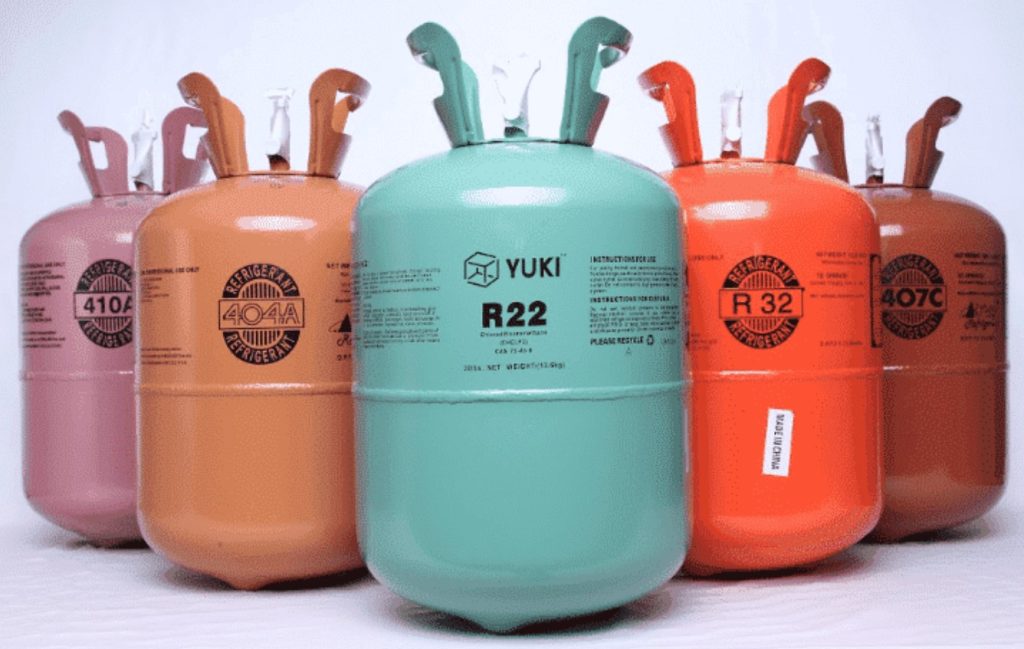
Why mix refrigerants?
Mixing refrigerants has long been a temptation for HVAC technicians seeking cost-effective ways of transitioning from older systems to the latest refrigerant types. Some refrigerants are cheaper and more readily available, so they are often used to top up existing systems. Practitioners also believe that mixing refrigerants can alter their heat transfer properties and thereby improve the performance of the system. Mixing certain refrigerants together can dilute the concentration of some of the harmful properties existing in them. R410A, for example, is made up of an equal-part mixture of R32 and R125 refrigerants. The R125 acts as a dampener for the flammability of the R32. In modern systems, R125 has been removed from the azeotropic R410A blend in favour of the lower global warming potential of R32.
The additional training required for technicians to safely use the highly flammable R32 is worth the impact on the fight against global warming. For this reason, R32 air conditioning systems are becoming widely available as the phase-out of harmful refrigerants continues. Retrofitted systems often use refrigerant changes in order to avoid the mass replacement of components. It’s cheaper to do refrigerant and oil changes than to replace large parts of the system when modifications are required. For this reason, technicians often employ this strategy as a cost-effective alternative. Mixing refrigerants is an exact science though, and a comprehensive knowledge of refrigerant properties, chemistry and thermodynamics is required before any attempt is made to mix refrigerants in an uncontrolled environment.
Why mixing refrigerants is not advisable:
Safety Concerns
Refrigerants have their own distinct chemical properties, boiling points, and pressure regulation requirements. Mixing different refrigerants together can create an unpredictably volatile environment, increasing the risk of explosions and potential harm to individuals. Hydrocarbons such as R600A (isobutane) are flammable and can pose a serious safety hazard if mixed with non-flammable refrigerants. Service technicians often use R134A in R600A systems for example; however, the lubrication requirement differences between the two is problematic. R600a is compatible with a semi-synthetic (mineral and alkybenzene mixture) oil, whereas R134A is used with a polyester oil (POE). R134A systems with higher-viscous polyester oils may be compatible with R600A; however, this isn’t always the case and when considering the solubility of these hydrocarbons with low-viscosity polyester oils, the risk simply isn’t worth it.
Unpredictable pressure buildup is also a major concern when mixing refrigerants in an uncontrolled environment and there is a case study currently being examined, where a non precise mix of gases caused the catostrophic failure of a pressure vessel in a system, resulting in a violent explosion that sadly cost the technician his life. Unfortunately these outcomes are alot more prevalent in unregulated sections of industry. We cover this in more depth in our reference on refrigerant charging methods.
System Inefficiency
Refrigerants have their own unique thermodynamic properties, such as saturation temperatures and pressure-temperature relationships, which enable them to work efficiently in the system that they are designed for. Mixing refrigerants can lead to an imbalance in these properties, resulting in reduced cooling capacity and potential system damage. Inaccurate mixtures also disrupt the energy efficiency of refrigerants and cause systems to require more energy to run optimally.
Environmental Impact
Refrigerants play a significant role in climate change, and their global warming potential (GWP) and ozone depletion properties contribute significantly to global environmental concerns. Refrigerants such as chlorofluorocarbons (CFCs) and hydrochlorofluorocarbons (HCFCs) potentially deplete the ozone layer and when mixed together, these chemical processes can be excellerated, thereby increasing its harmful effects. The GWP of refrigerants is increased when they are mixed together, and this further exacerbates climate change and its impacts.
Reduced Cooling Performance
Mixing refrigerants can result in a decrease in system efficiency and cooling capacity. The incompatible refrigerants may not work harmoniously, leading to inadequate cooling or inability to reach optimal temperatures. It can also cause the system to consume more energy and increase operating costs.
System Damage
Chemical reactions that occur when incompatible refrigerants are mixed can lead to corrosion, clogging, and other damage to system components. These can result in costly repairs or even the need for a complete system replacement. Chemical reactions harm system pH and viscosity of lubricant, impacting both acidity and alkalinity, causing detrimental effects. Solid particles such as sludge often form within the system, which can clog up components and create oil return issues.
Inaccurate Diagnosis
Mixing refrigerants can also complicate troubleshooting efforts and the diagnosis of potential system failures. Different refrigerants have specific operating characteristics, and mixing them can mask or distort the symptoms of a problem. In one case study from Samsung’s DVMS training program, a system error was misdiagnosed as a faulty compressor head temperature thermistor. The system’s diagnostic software reacted to inaccurate data because it was designed to analyze R410A refrigerant, not a mix with R22. The technician had run out of R410A refrigerant and then used R22 in order to top up the system.
Conclusion
Mixing refrigerants is not recommended, due to the significant risks and consequences associated with it. The potential safety hazards, compromised system efficiency, and environmental impact make it a practice best avoided. Instead, it is advisable to stick to using the proper refrigerant recommended by the manufacturer for your specific system. If you have concerns or issues with your cooling system, it is always advisable to consult a qualified HVAC technician. Responsible handling and disposal of refrigerants are essential to minimizing environmental impact and ensuring the longevity and efficiency of systems.

+ There are no comments
Add yours